ابحث في المحطة بأكملها
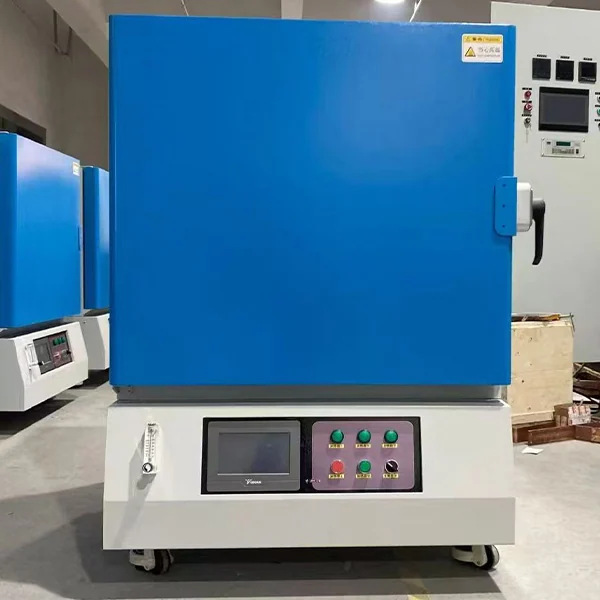
An industrial muffle furnace is a specialized high-temperature heating equipment designed for controlled thermal processing of materials in industrial settings. Unlike laboratory-scale models, it is engineered to handle large workloads, continuous operation, and harsh industrial environments. Its defining feature is the muffle chambera sealed heating compartment that isolates the material from direct contact with heating elements and combustion gases, ensuring uniform temperature distribution and preventing contamination.
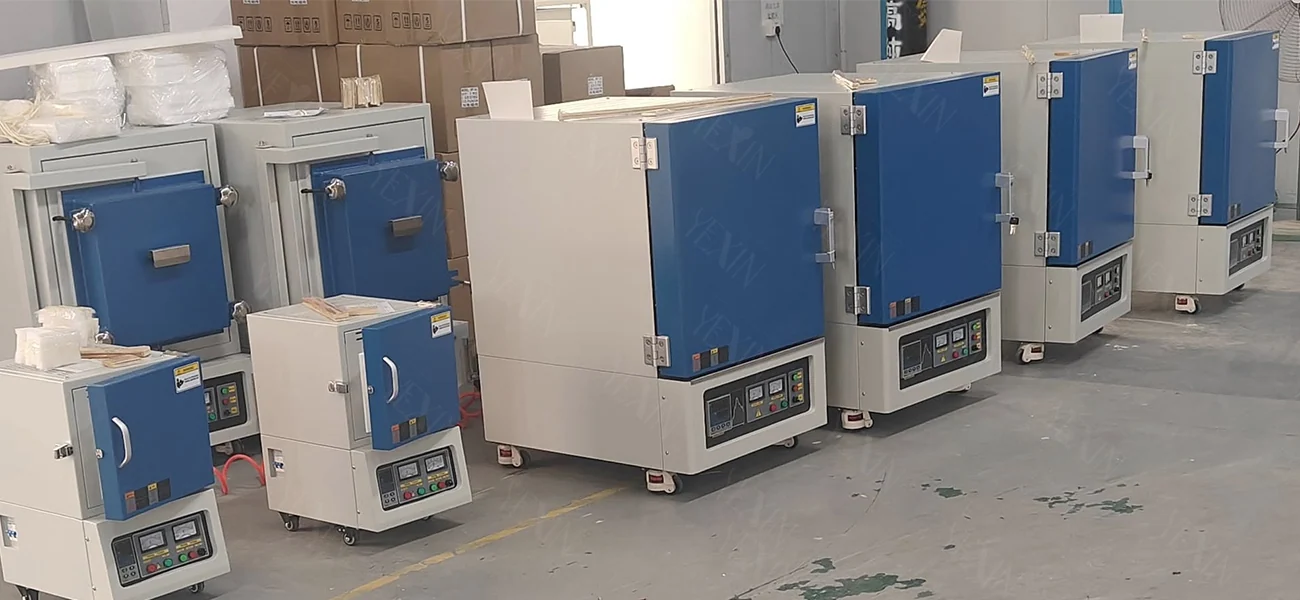
The furnace operates by converting electrical energy into heat via heating elements (e.g., resistance wires, silicon carbide rods), which are strategically placed around the muffle chamber. Advanced temperature control systems, often incorporating PID (Proportional-Integral-Derivative) regulators, maintain precision within ±1–5°C, critical for processes like sintering and annealing. Insulation materials such as ceramic fiber or refractory bricks minimize heat loss, enhancing energy efficiency.
In steel plants, industrial muffle furnaces are used to anneal cold-rolled steel strips. The controlled atmosphere within the muffle prevents oxidation, ensuring the steel retains its structural integrity. This process reduces material defects by 30% compared to open-hearth furnaces, according to industry reports1.
| Parameter | Range | Importance |
|---|---|---|
| Temperature Range | 500–1800°C | Determines suitability for specific materials. |
| Heating Rate | 5–20°C/min | Affects process efficiency and throughput. |
| Chamber Volume | 50–1000+ liters | Scales with production demands. |
| Control System | PID, PLC, or IoT-enabled | Ensures precision and remote monitoring. |
| Insulation Type | Ceramic fiber/refractory | Impacts energy consumption and safety. |
Modern furnaces integrate infrared radiant coatings, which enhance heat transfer efficiency by up to 20%2. Additionally, variable frequency drives (VFDs) optimize power usage, reducing operational costs by 15–25% compared to older models2.
Manufacturers are prioritizing low-carbon designs, using recycled insulation materials and energy recovery systems. Some models now achieve 90% thermal efficiency, aligning with global net-zero goals.
Look for certifications like CE (Conformité Européenne) and ISO 9001, which validate safety features such as overheat protection and emergency shutdown systems2.
The industrial muffle furnace market is projected to grow at a 5.8% CAGR through 2028, driven by demand for advanced materials in renewable energy and electric vehicles. Key innovations will focus on:
Industrial muffle furnaces are indispensable for modern manufacturing, offering precision, efficiency, and versatility. When selecting a furnace, prioritize energy efficiency, smart controls, and scalability to future-proof your operations. With ongoing advancements in IoT and materials science, these furnaces will continue to be a cornerstone of industrial progress.
| Model | Max.temperature | Inner volume | Inner size | Power and Voltage |
| YX-1200-1L | 1200℃ | 1L | 105*105*110mm | 1KW/AC220V |
| YX-1200-4.5L | 1200℃ | 4.5L | 150*150*200mm | 2.5KW/AC220V |
| YX-1200-7.2L | 1200℃ | 7.2L | 200*120*300mm | 3KW/AC220V |
| YX-1200-18L | 1200℃ | 18L | 250*250*300mm | 5KW/AC220V |
| YX-1200-36L | 1200℃ | 36L | 300*300*400mm | 9KW/AC380V |
| YX-1400-3.6L | 1400℃ | 3.6L | 150*150*160mm | 4KW/AC220V |
| YX-1400-8L | 1400℃ | 8L | 200*200*200mm | 6KW/AC220V |
| YX-1400-18L | 1400℃ | 18L | 250*250*300mm | 9KW/AC220V |

 xuye
xuye