Buscar en toda la estación
There’s a reason chemists have relied on glass reaction vessels since the earliest days of organic synthesis: glass lets you watch the reaction happen. Color changes, phase separations, crystallization onset, reflux behavior, foaming, gas evolution — all of it is visible in real time with a glass reactor, in a way that no opaque stainless steel vessel can match. Combine that visual transparency with modern jacketed temperature control, precision agitation, and modular glassware components, and you have one of the most versatile pieces of equipment in any chemistry lab, pilot plant, or process development facility.
We manufacture a complete line of glass reactor vessels — from single-jacketed bench units to fully automated, multi-neck jacketed glass reactor systems designed for continuous process development, kilo-lab scale-up, and specialty chemical production.
A glass reactor is a chemical reaction vessel constructed from high-purity borosilicate glass, used to carry out synthesis, crystallization, extraction, distillation, and other unit operations under precisely controlled temperature conditions. Unlike a simple round-bottom flask, a true glass reactor system integrates:
Because glass is chemically inert to nearly all reagents except hydrofluoric acid and strong hot alkalis, a glass reactor vessel provides broad chemical compatibility without the risk of metal ion contamination — a critical consideration for pharmaceutical intermediates, high-purity specialty chemicals, and any process where product purity cannot be compromised by trace metal leaching.
The single biggest advantage of a glass reactor over a stainless steel vessel is visibility. You can directly observe:
This visual feedback is invaluable during process development, troubleshooting, and scale-up, letting chemists catch problems — or opportunities — that would be completely invisible inside an opaque metal reactor.
Borosilicate glass resists attack from acids, most organic solvents, halogens, and oxidizing agents far more broadly than even high-grade stainless steel. This makes a glass reactor vessel the preferred choice for:
A jacketed glass reactor allows heating or cooling fluid to circulate through an outer glass jacket surrounding the reaction vessel, giving you tight, uniform temperature control across the full working range — typically from around -80°C (with appropriate cryogenic fluid) up to 200°C or higher depending on jacket design and fluid selection. This is essential for:
Unlike a fixed stainless steel reactor, a glass reactor system is built from modular, interchangeable glass and PTFE components — lids, condensers, addition funnels, dip tubes, thermowells — that can be reconfigured for different experiments without purchasing an entirely new vessel. This modularity is a major reason Chemglass reactor systems and similar modular platforms have become a standard fixture in academic, pharmaceutical, and specialty chemical R&D labs worldwide. and internals, optional explosion-proof electrical components, and geometry designed to scale predictably into full-size stainless steel chemical reactor systems later.
Our jacketed glass reactor line is built around a double-walled borosilicate vessel that circulates heat transfer fluid (water, glycol, or silicone oil, depending on your temperature range) between an inner reaction chamber and an outer glass jacket. Available in single-jacket and higher-performance dimpled-jacket designs for improved heat transfer efficiency, these reactors are the workhorse configuration for most synthesis and process development applications.
Key specifications:
For applications that don’t require jacketed temperature control, or where an external heating/cooling bath is preferred, our standard glass reactor vessel line offers single-wall borosilicate construction in the same range of capacities. These vessels are ideal for:
Many labs standardize their glassware around the modular design philosophy popularized by Chemglass reactor systems — a widely recognized approach to lab-scale glass reaction equipment built on interchangeable, standard-taper ground-glass joints and modular component libraries. We manufacture fully compatible modular glass reactor components, including lids, condensers, addition funnels, and jacketed vessels, engineered to standard joint sizes so they integrate seamlessly with existing Chemglass-style setups or serve as a complete standalone system for labs building out new glass reactor infrastructure.
Why modular compatibility matters:
As processes move from bench-scale development toward scale-up, we offer larger-capacity jacketed glass reactor systems — typically from 20 liters up to 200 liters — engineered for kilo-lab and small pilot-plant production. These systems retain the visual process control and chemical compatibility advantages of glass while incorporating more robust support frameworks, larger-capacity circulators, and heavier-duty agitation drives suited to extended production runs.cleaning agents and any incidental contact chemistries — before recommending a material specification, since a reactor is only as reliable as its weakest wetted component.
The overwhelming majority of glass reactor vessels — including our full product line — are manufactured from borosilicate glass 3.3 (equivalent to Pyrex/Duran-type glass), chosen for its:
Ground-glass joints provide the primary seal between reactor components, often reinforced with PTFE sleeves for leak-free, non-stick performance that resists sticking even after prolonged exposure to aggressive reagents. Vessel-to-lid seals typically use PTFE or Viton O-rings and gaskets, selected based on your specific chemical compatibility and temperature requirements. Stainless steel or PTFE-coated clamps secure the flange connection between the vessel body and lid, maintaining a reliable seal even under vacuum or mild positive pressure.
Our glass reactor systems support several agitation configurations:
Variable-speed digital stirrer controllers for precise, repeatable mixing intensity across experiments
PTFE-bladed stirrers on a glass or PTFE-coated shaft, driven by an overhead mechanical stirrer motor, suitable for most general-purpose mixing
Anchor or paddle impellers for higher-viscosity media or wall-scraping applications
Magnetic stirring options for smaller-volume vessels where a sealed, drive-free mixing solution is preferred
The standard configuration for most jacketed glass reactor systems, a single glass jacket surrounds the reaction vessel, circulating heat transfer fluid supplied by an external heating/cooling circulator. This design offers reliable, cost-effective temperature control suitable for the majority of synthesis and crystallization applications.
For applications requiring faster heat transfer response — particularly rapid cooling of highly exothermic reactions — a dimpled jacket design increases the fluid flow velocity and turbulence against the vessel wall, improving heat transfer coefficients compared to a smooth single jacket.
For cryogenic applications or processes requiring exceptional temperature stability with minimal external heat gain, a vacuum-insulated double-jacket design provides superior thermal isolation, similar in principle to a laboratory Dewar flask, while still allowing active circulation of a heat transfer fluid in the innermost jacket layer.
Your choice of external heating/cooling circulator determines the practical temperature range of your jacketed glass reactor. Silicone oil-based circulators typically extend the usable range up to 200°C or higher, while low-temperature circulators using specialized heat transfer fluids can achieve temperatures down to -80°C or lower for cryogenic synthesis work. We can advise on circulator selection and glass jacket compatibility as part of your system specification.
Many glass reactor vessel configurations are rated for vacuum operation, making them well-suited to:
Vacuum-rated glass reactors require appropriately rated glass wall thickness, properly sealed ground-glass joints, and a suitable vacuum pump and cold trap configuration. Our engineering team can specify the correct glass reactor and accessory configuration for your target vacuum level and operating temperature.
Glass reactors are the standard equipment for process chemistry labs developing and optimizing synthetic routes to active pharmaceutical ingredients and intermediates, where visual process monitoring and freedom from metal contamination are both critical.
University and government research labs rely on modular jacketed glass reactor systems for a huge range of synthetic and materials chemistry research, valuing the flexibility to reconfigure equipment across many different experimental programs.
Small-batch specialty chemical producers use glass reactor vessels for products where visual process control, chemical purity, and flexible batch sizing matter more than the very large throughput of an industrial stainless steel chemical reactor.
The chemical inertness of glass makes it ideal for producing sensitive flavor and fragrance compounds and cosmetic actives, where any trace metal contamination could alter scent, taste, or stability.
Before committing to full production-scale equipment, process development teams use larger jacketed glass reactor systems to validate reaction conditions, heat transfer requirements, and mixing performance at an intermediate scale — informing the design of eventual stainless steel or Hastelloy production equipment.
Every research program has slightly different requirements, so we offer a wide range of customization across our glass reactor line:
Full jacketed glass reactor packages bundled with compatible heating/cooling circulators
Custom vessel capacity and neck configuration (3-neck, 4-neck, 5-neck, or custom port layouts)
Single, dimpled, or vacuum-insulated jacket designs
PTFE, Viton, or custom gasket materials for specific chemical compatibility
Bottom-drain valve options for easy product discharge
Custom stirrer shaft length and impeller geometry
Compatibility with standard-taper ground-glass joint sizes used across major modular glass reactor platforms, including Chemglass-style systems
Digital overhead stirrer controllers with programmable speed ramps and torque monitoring
Technical consultation on jacket design, circulator selection, and scale-up planning as your process moves from bench-scale glass reactor work toward larger jacketed systems or eventual stainless steel production equipment
Setup guidance for assembling multi-component glass reactor systems, including proper joint lubrication and clamp torque practices
Operator training on safe glass reactor operation, including pressure and vacuum limits, thermal shock avoidance, and proper handling procedures
Genuine replacement glassware and PTFE components, including gaskets, stirrer guides, and joint sleeves
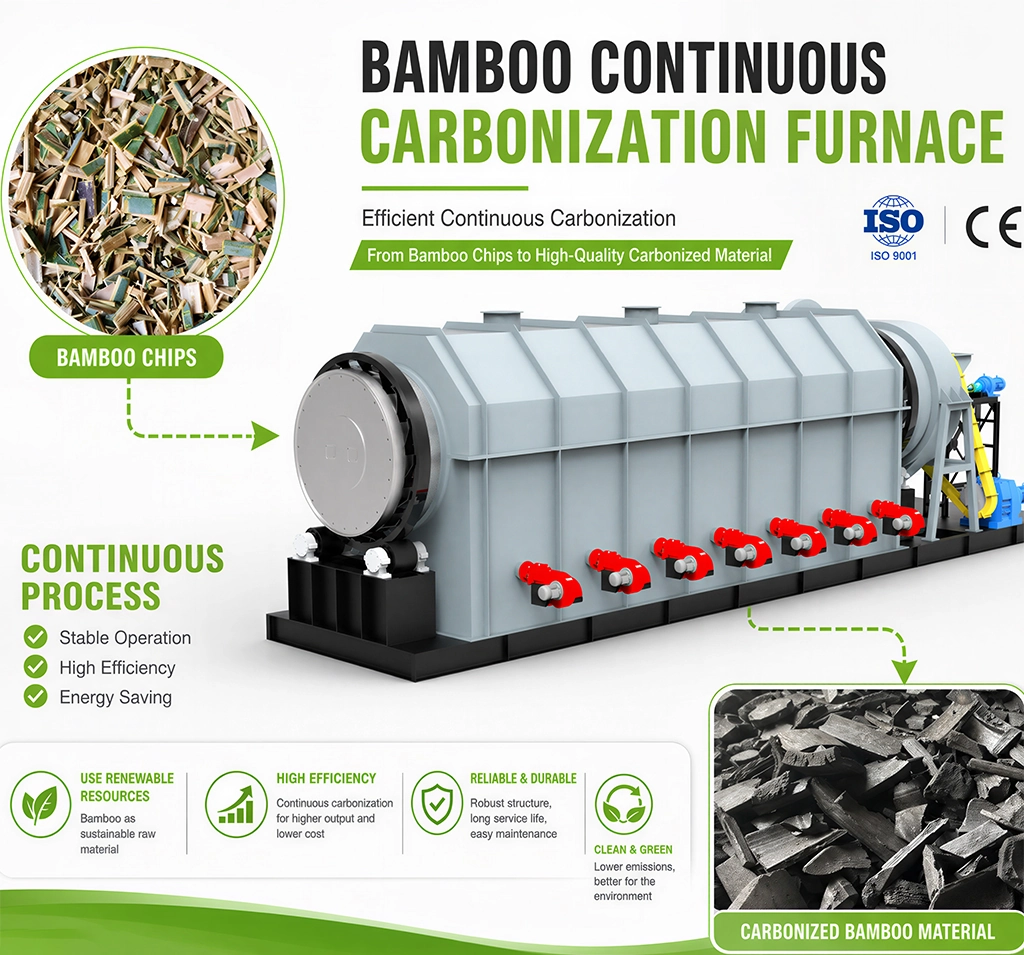
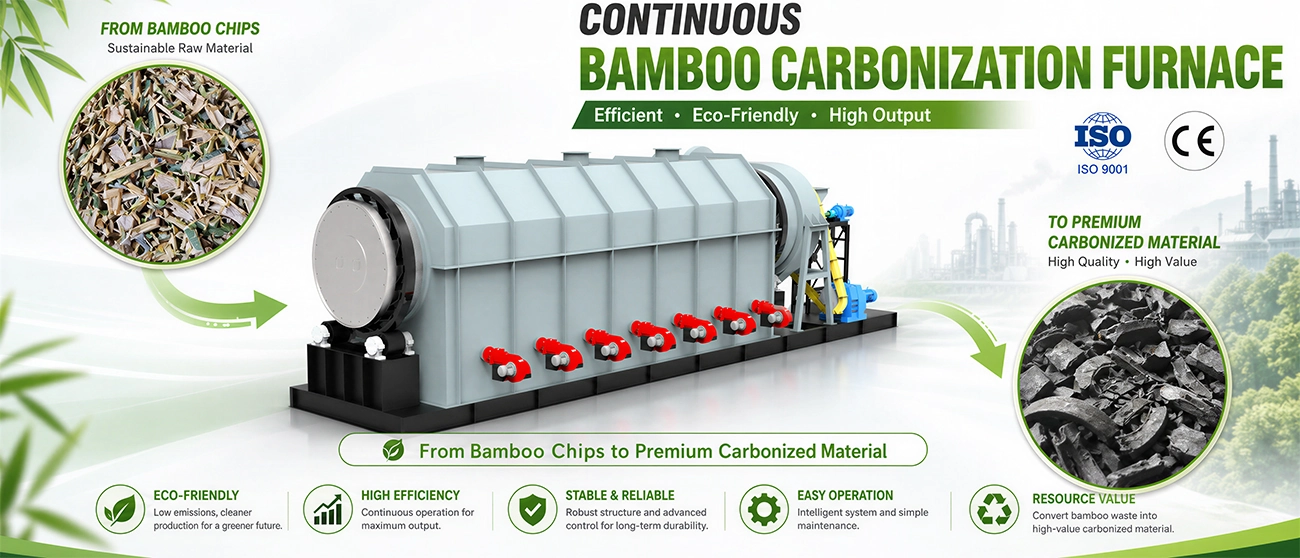
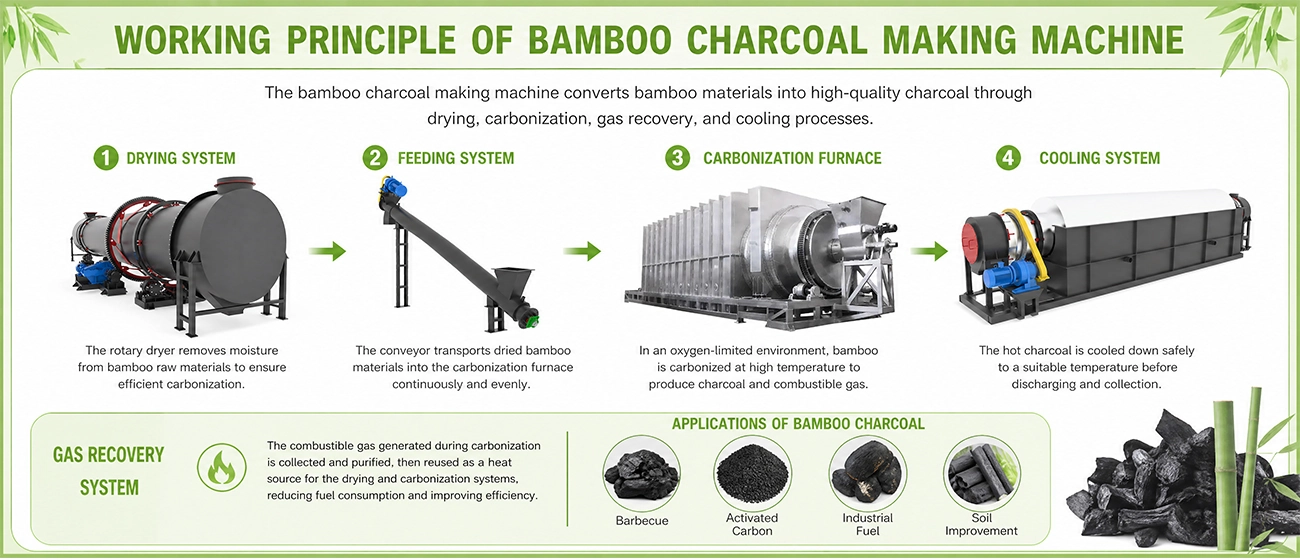
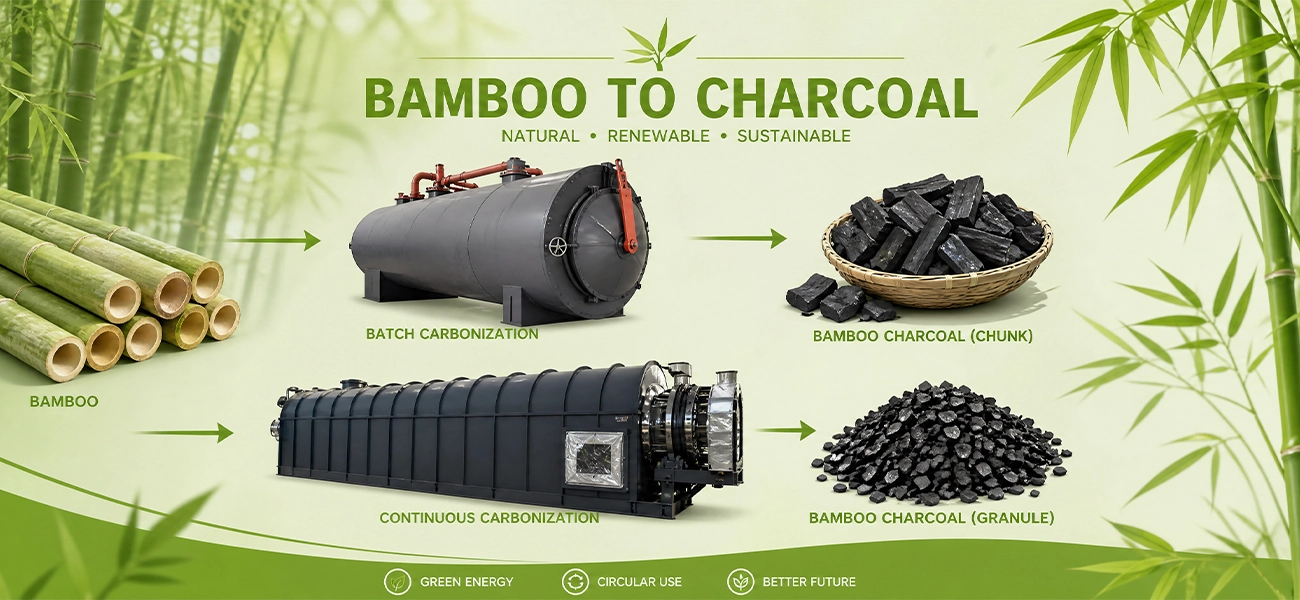
| Model | XY-800 | XY-1000 | XY-1200 | XY-1500 | XY-1800 | XY-2000 |
| Number of cylinder layers | Single | Single | Double | Double | Double | Double |
| Cylinder diameter | 800mm | 1000mm | 1200/700mm | 1500/900mm | 1800/1200mm | 2000/1500mm |
| Capacity | 200-300kg/h | 300-400kg/h | 450-600kg/h | 600-800kg/h | 800-1000kg/h | 1000-1200kg/h |
| Cylinder material | 309S/310S/316L | 309S/310S/316L | 309S/310S/316L | 309S/310S/316L | 309S/310S/316L | 309S/310S/316L |
| Temerature | 500-800ºC | 500-800ºC | 500-800ºC | 500-800ºC | 500-800ºC | 500-800ºC |
| Carbonization time | 20-60min | 20-60min | 20-60min | 20-60min | 20-60min | 20-60min |
| Raw material particle size | ≤4cm | ≤4cm | ≤4cm | ≤4cm | ≤4cm | ≤4cm |
| Heating method | indirect heating | indirect heating | indirect heating | indirect heating | indirect heating | indirect heating |
| Operation mode | continuously working | continuously working | continuously working | continuously working | continuously working | continuously working |
| Control method | PLC control | PLC control | PLC control | PLC control | PLC control | PLC control |
Frequently asked questions
“Glass reactor” is the general category of borosilicate glass reaction vessels, while “jacketed glass reactor” specifically refers to a design with an outer glass jacket that circulates heating or cooling fluid around the reaction vessel for precise temperature control. Many labs use the terms interchangeably since jacketed designs are the most common configuration in practice.
This depends primarily on your jacket fluid and circulator, not the glass itself. Silicone oil circulators can typically drive jacket temperatures up to 200°C or higher, while the borosilicate glass vessel itself can tolerate significantly higher temperatures — the practical limit is usually set by the heat transfer fluid and circulator specifications.
Yes, many glass reactor vessel configurations are rated for vacuum operation, making them suitable for solvent recovery, vacuum distillation, and degassing applications. Vacuum-rated units require appropriate glass wall thickness and properly sealed ground-glass joints.
Choose a glass reactor when visual process monitoring, broad chemical compatibility, and modular reconfiguration matter most — typically at bench to kilo-lab scale. Choose a stainless steel reactor when you need higher pressure ratings, larger production-scale capacity, or greater mechanical durability for a validated, high-volume process.
Yes, we can supply complete jacketed glass reactor packages bundled with a compatible heating/cooling circulator sized to your required temperature range, or advise on circulator selection if you’re sourcing one separately.