Recherche dans l'ensemble de la station
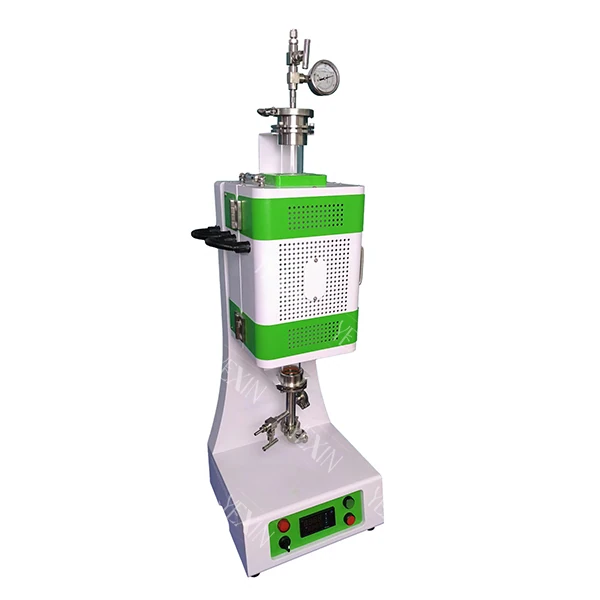
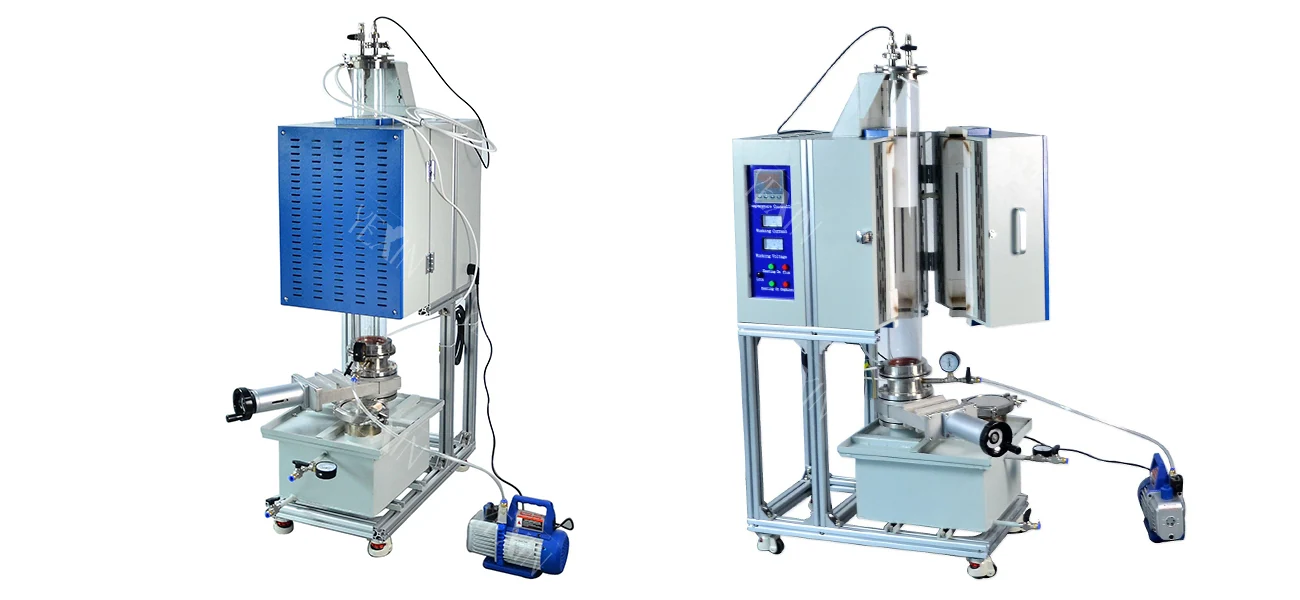
A drop tube furnace is a device designed for continuous high-temperature processing of granular or droplet-shaped materials. Its core design consists of a vertical tubular furnace chamber. Materials are fed freely through a top-loading device in the form of drops or granules. During their descent, they come into contact with the high-temperature airflow or the furnace walls, resulting in rapid heating, reaction, or pyrolysis. Its typical structure includes:
Vertical furnace tubes: Typically constructed of high-temperature-resistant materials (such as alumina or quartz), with an inner diameter designed based on the processing capacity, typically ranging from 50 to 150 mm.
Heating system: Typically heated by resistance wire or silicon carbon rods, with temperature uniformity achieved through segmented temperature control.
Material conveying device: A hopper feeder or liquid atomizer nozzle is located at the top, with a collection device at the bottom.
Atmosphere control module: Supports the introduction of inert gas, reactive gas, or vacuum to meet oxidizing, reducing, or inert environment requirements.
Key Features of a Drop-Tube Furnace
Rapid Thermal Response: The material residence time in the furnace is short (typically seconds to minutes), making it suitable for studying transient high-temperature reactions (such as pyrolysis and sintering).
Continuous Processing Capability: Continuous feeding and discharging enable batch production and improve efficiency.
Precise Parameter Control: Key parameters such as temperature (room temperature to 1800°C), atmosphere composition, and material drop velocity can be controlled.
Wide Material Adaptability: Suitable for a variety of material forms, including powders, granules, and droplets, and particularly suitable for dispersing easily agglomerated materials.
Typical Applications:
Materials Science Research
Nano-Powder Synthesis: For example, rapid sintering of ceramic nanoparticles and metal oxide powders.
Studying Material Pyrolysis Behavior: Simulating the decomposition pathways and product properties of materials under high-temperature environments.
Energy and Environmental Protection:
Biomass Pyrolysis: Converting biomass pellets into biochar or bio-oil.
Catalyst Regeneration: Restoring catalyst activity through high-temperature treatment, such as in the regeneration of automotive exhaust catalysts.
Metallurgy and Chemical Industry
Metal Powder Preparation: Atomizing metal salt solutions and then pyrolyzing and reducing them to ultrafine metal powders.
Scrap Material Recycling: For example, high-temperature separation and purification of metals from electronic waste.
Semiconductor and Electronic Materials
Thin Film Precursor Synthesis: High-purity compound powders required for the preparation of semiconductor thin films.
Ceramic Coating Preparation: Forming ceramic coatings on substrate surfaces through the pyrolysis reaction of vapor deposition precursors.
Advantages Compared to Other Tube Furnaces
Comparison Items: Drop Tube Furnace, Horizontal Rotating Tube Furnace, Vertical Static Tube Furnace
Material Flow Mode: Free Fall (Short Contact), Rotating Tumble (Continuous Contact), Static Position (Fixed Position Heating)
Processing Efficiency: Continuous batch processing, suitable for large-scale production; Continuous processing, suitable for high-viscosity materials; Batch processing, suitable for small sample experiments
Temperature Uniformity: Controllable axial gradient, concentrated localized high temperature zone; High overall uniformity, suitable for long-term heating; Small vertical temperature gradient
Typical Applications: Transient reaction, powder synthesis, ceramic firing, metal sintering, thin film deposition, material annealing
Selection Considerations:
Temperature Range: Select based on the material reaction requirements (typically 800-1600°C, up to 1800°C for special applications).
Furnace Tube Material: Alumina or quartz tubes are preferred for high-temperature or corrosive environments.
Atmosphere Compatibility: Verify that the equipment can handle flammable, explosive, or highly corrosive gases. Automation level: Industrial grade equipment can choose automatic feeding/collecting system with PLC control to reduce manual intervention
| Model | YXV-1200-V1 |
| Furnace tube specifications | 50*42*500mm(outer diameter*inner diameter*length)with 5-10micron sand core layer in the middle |
| Operating voltage | Single-phase AC220V,50/60Hz |
| Heating element | High-quality HRE heating wire |
| Operating temperature | Maximum temperature:1200℃(≤30min)Long-term working temperature:1100℃ Recommended heating rate:5-20℃/min |
| Heating zone | Heating zone length:220mm Constant temperature zone length:60mm(±3℃) |
| Maximum power | 1.5KW |