Buscar en toda la estación
The muffle furnace is one of the most widely used pieces of heating equipment in laboratory, quality control, and materials research settings, engineered to isolate samples from direct contact with heating elements and combustion byproducts while delivering precise, uniform, high-temperature processing. Our laboratory muffle furnace line covers standard benchtop muffle furnace models for routine testing through high temperature muffle furnace configurations reaching 1800°C for advanced materials research, all built around low-thermal-mass ceramic fiber muffle furnace chamber construction for fast heat-up, stable temperature uniformity, and long service life.
Whether you need a box muffle furnace for routine ashing and loss-on-ignition testing, a high-temperature unit for ceramics sintering, or a chamber sized for larger sample batches, our muffle furnace product line is built from configurable options — chamber size, maximum temperature, insulation grade, and control system — matched to your specific application rather than a single fixed catalog design.
A muffle furnace is a laboratory heating instrument in which the sample chamber (“muffle”) is thermally isolated from the heating elements, protecting the sample from direct flame or element contact and from contamination by combustion gases — historically the defining feature that separates a muffle furnace from a simpler open-element oven. In modern electric muffle furnaces, this isolation principle continues even though there’s no combustion involved: the chamber lining separates the sample cavity from the heating element cavity, delivering a cleaner, more controlled thermal environment than a furnace where the sample sits in direct contact with the heating elements.
This isolated-chamber design is what makes the muffle furnace the standard choice for applications like ashing (where sample purity and freedom from contamination matter directly to the test result) and any process where consistent, uncontaminated, uniform heating is essential to result validity.
Our muffle furnace chambers are built using low-thermal-mass ceramic fiber insulation rather than dense traditional refractory brick construction, and this choice has a direct, practical impact on how the furnace performs in daily laboratory use.
Faster heat-up and cool-down. Because ceramic fiber carries dramatically less thermal mass than dense firebrick, less time and energy is spent heating the insulation itself before the chamber reaches your target temperature — and the chamber cools faster afterward, letting you turn around sample batches more quickly.
Better energy efficiency. Less energy wasted heating the chamber structure translates directly into lower operating cost per test cycle, which compounds meaningfully for labs running multiple batches per day.
Excellent thermal shock resistance. The flexible ceramic fiber structure tolerates the repeated heating and cooling cycles of daily lab use without the cracking and spalling that can affect dense refractory linings under the same thermal cycling stress over time.
Stable, uniform temperature. Ceramic fiber chamber design supports even heat distribution across the muffle cavity, an important factor in achieving consistent, repeatable results across your sample batches.h particulate or powder source material benefiting from gravity-assisted feed, and applications where a compact vertical footprint is preferred over horizontal bench space.
Compact units designed for routine laboratory use — ashing, loss-on-ignition testing, general sample preparation, and quality control work where chamber volume requirements are modest and bench space is at a premium. Benchtop models prioritize fast cycling and ease of daily operation.
Larger-capacity units for higher sample throughput, bigger individual samples, or applications requiring more chamber volume than a benchtop unit can accommodate — commonly specified for materials testing labs, heat treatment applications, and facilities processing larger batch volumes.
Configurations built for sustained operation well above standard laboratory range — up to approximately 1800°C — using high-temperature-rated ceramic fiber insulation and appropriate heating element technology (including silicon carbide or molybdenum disilicide elements for the highest-temperature models) to support ceramics sintering, advanced materials research, and other applications operating beyond general-purpose furnace range.
Low-thermal-mass ceramic fiber chamber construction supports rapid heat-up and cool-down cycling while maintaining stable temperature uniformity across the chamber — critical for repeatable, batch-to-batch consistent results in ashing, calcination, and heat treatment applications.
Multi-segment PID temperature control supports custom ramp/soak profiles matched to your specific test method or process recipe, reducing operator intervention and improving run-to-run repeatability across your lab.
Smooth chamber surfaces and accessible chamber geometry support straightforward cleaning between sample batches — an important consideration for labs running diverse sample types where cross-contamination between tests must be avoided.
Furnace doors are engineered for reliable, repeated daily opening and closing cycles typical of high-throughput lab use, with sealing designed to minimize heat loss and maintain chamber temperature stability even with frequent door operation.
From compact benchtop chambers to larger box muffle furnace capacities, chamber volume can be matched to your typical sample size and batch throughput requirements, avoiding the energy waste of an oversized chamber or the throughput limitation of an undersized one.
Standard safety features include over-temperature protection and automatic shutdown interlocks, protecting both samples and operators during daily use.
Muffle furnaces are the standard equipment for ashing analysis across food science, environmental testing, and materials analysis, where rapid, controlled heating and reliable recovery time between sample batches directly affect daily lab throughput.
Chemical, mineral, and materials calcination processes rely on muffle furnaces for the controlled, uniform high-temperature exposure required to drive off volatile compounds and achieve target material transformation.
High temperature muffle furnace configurations support ceramics research, powder metallurgy sintering, and advanced materials densification processes requiring sustained high-temperature exposure with good temperature uniformity.
Metallurgical sample annealing, stress relieving, and general laboratory heat treatment applications use muffle furnaces for precise, repeatable thermal processing of test specimens.
Muffle furnaces support a wide range of standardized test methods across quality control laboratories, where consistent, uncontaminated heating conditions are essential to valid, comparable test results.
Dental laboratory and jewelry industry burnout and casting applications use compact muffle furnace configurations for wax burnout and investment casting workflows requiring precise, repeatable temperature cycling.
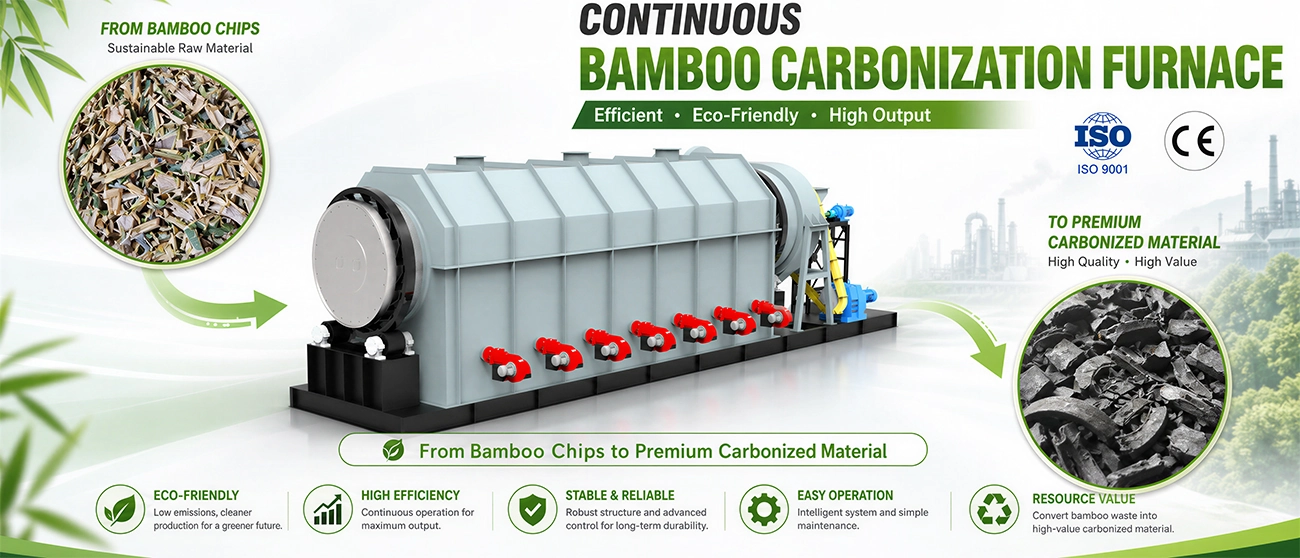
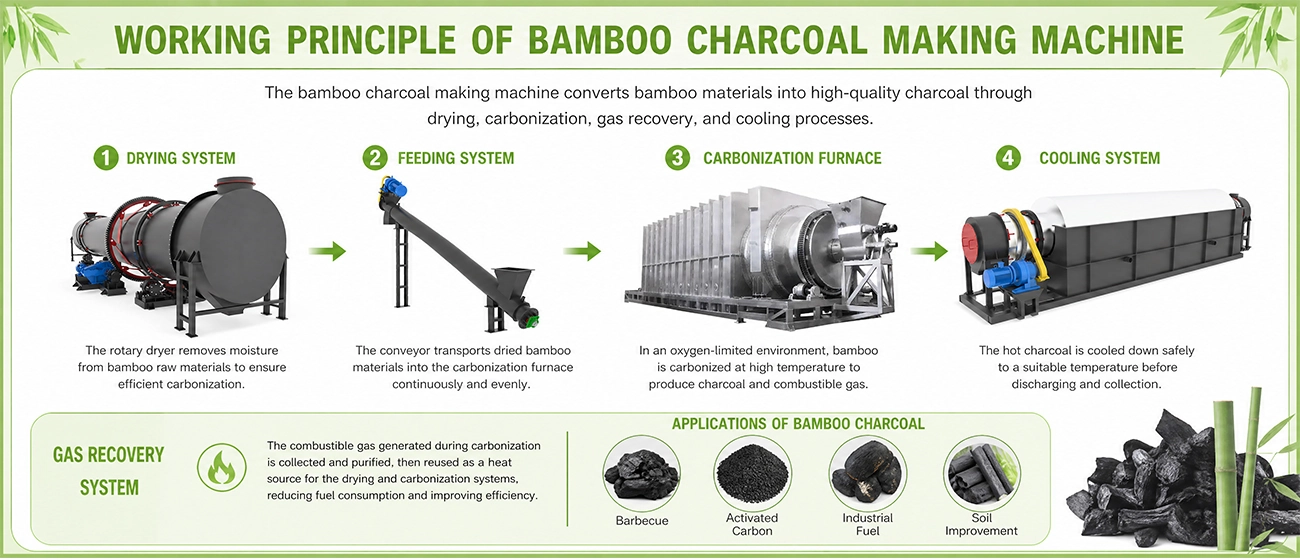
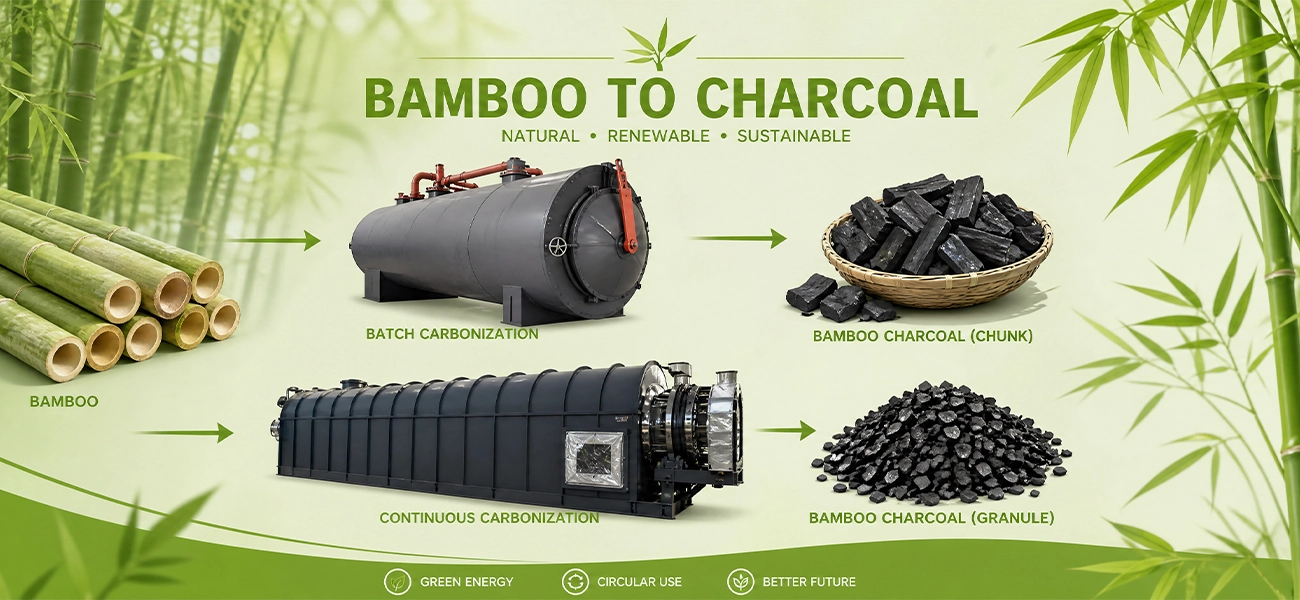
| Model | XY-800 | XY-1000 | XY-1200 | XY-1500 | XY-1800 | XY-2000 |
| Number of cylinder layers | Single | Single | Double | Double | Double | Double |
| Cylinder diameter | 800mm | 1000mm | 1200/700mm | 1500/900mm | 1800/1200mm | 2000/1500mm |
| Capacity | 200-300kg/h | 300-400kg/h | 450-600kg/h | 600-800kg/h | 800-1000kg/h | 1000-1200kg/h |
| Cylinder material | 309S/310S/316L | 309S/310S/316L | 309S/310S/316L | 309S/310S/316L | 309S/310S/316L | 309S/310S/316L |
| Temerature | 500-800ºC | 500-800ºC | 500-800ºC | 500-800ºC | 500-800ºC | 500-800ºC |
| Carbonization time | 20-60min | 20-60min | 20-60min | 20-60min | 20-60min | 20-60min |
| Raw material particle size | ≤4cm | ≤4cm | ≤4cm | ≤4cm | ≤4cm | ≤4cm |
| Heating method | indirect heating | indirect heating | indirect heating | indirect heating | indirect heating | indirect heating |
| Operation mode | continuously working | continuously working | continuously working | continuously working | continuously working | continuously working |
| Control method | PLC control | PLC control | PLC control | PLC control | PLC control | PLC control |
Frequently asked questions
High temperature tube furnace configurations, using alumina tube construction and silicon carbide or molybdenum disilicide heating elements, reach up to approximately 1700-1800°C depending on the specific model.
Yes — these specifications are independent and can be combined to match your exact process. Contact our technical team with your process details for a tailored configuration.
Yes, multi-zone vertical furnace configurations with independently controlled heating zones are available, purpose-built for the gradient control that crystal growth and sublimation processes require.
In many furnace designs, yes — the tube is a field-replaceable component. However, confirm with our technical team that your specific furnace’s heating elements and chamber design can reach alumina-tube temperature ranges before assuming an upgrade path exists, since not every quartz-rated furnace has the heating element technology needed for alumina-tube temperatures.
Routine maintenance includes periodic inspection of heating elements and insulation condition, tube inspection for cracking or devitrification (particularly relevant for quartz tubes used near their temperature ceiling), and — for vacuum-compatible models — periodic seal and gasket inspection to maintain vacuum performance.