Buscar en toda la estación
Scope of application
In the field of environmental monitoring, it is used for thermal carbon analysis (OC/EC separation) of atmospheric particulate matter source analysis and loss on ignition testing of soil sediments. In terms of material processing, it supports degreasing and sintering of ceramic precursors, reduction treatment of metal powders (H₂ atmosphere), and precision annealing of glass materials.
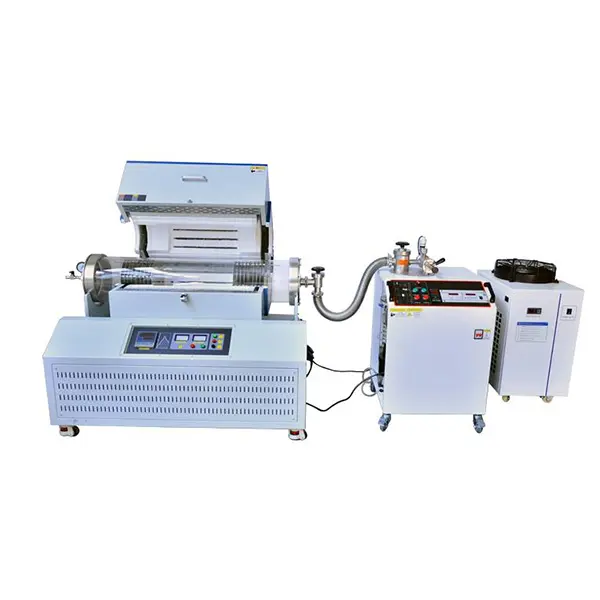
laboratory tube furnace is a specialized type of scientific heating equipment designed for precise thermal processing under controlled temperature and atmosphere conditions. It is widely used in laboratories, universities, and research institutes for applications such as material synthesis, annealing, calcination, pyrolysis, and thermal treatment of various samples.
Thanks to its compact structure, accurate temperature control, and flexible configuration, the lab tube furnace has become an indispensable tool for researchers working in materials science, chemistry, and environmental engineering.
A laboratory tube furnace typically consists of several key components:
There are several types of lab tube furnaces, depending on the heating direction, temperature range, and control features:
Designed for general laboratory heating tasks, it provides stable temperature control in one uniform heating zone.
Equipped with two or three independently controlled zones, this furnace ensures a temperature gradient or uniform heating across the entire tube, ideal for advanced material studies.
Features a split-body design that allows easy access to the tube and sample, perfect for frequent sample changes and maintenance.
Mounted vertically to facilitate processes like CVD, gas-solid reactions, or deposition experiments.
The laboratory tube furnace is a versatile heating system used in a wide range of research and industrial applications:
Its precise temperature control and adaptable configurations make it suitable for both academic research and industrial testing laboratories.
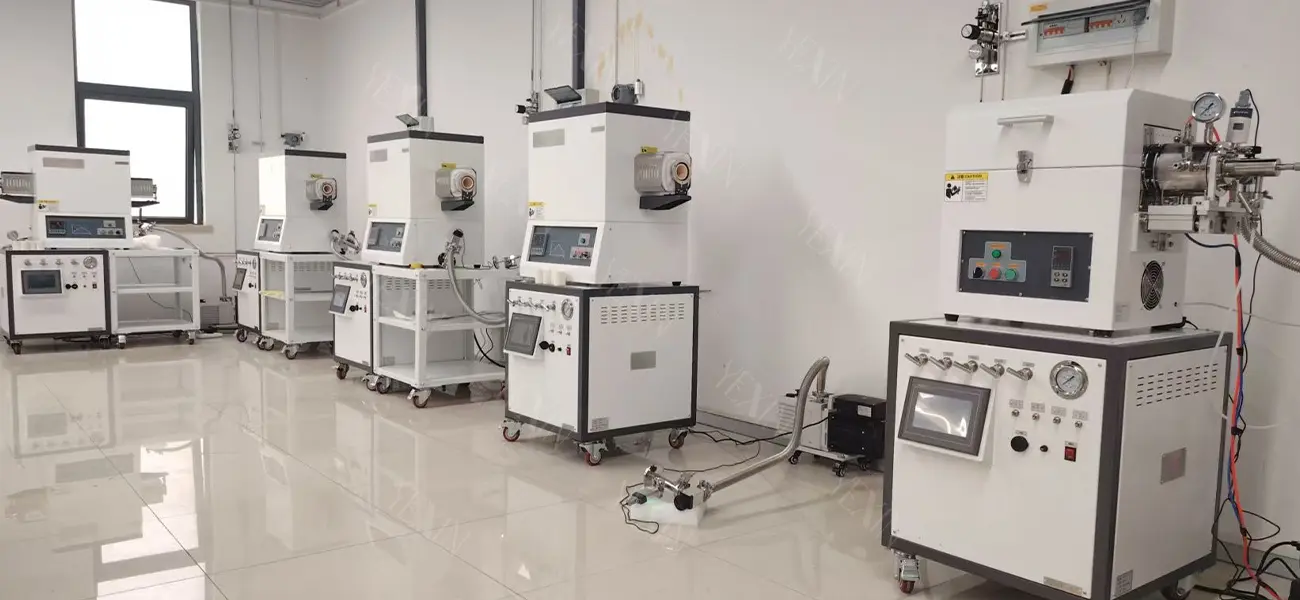
Our laboratory tube furnaces are designed with precision, reliability, and flexibility in mind. We offer customizable models to meet specific research needs:
Each lab tube furnace undergoes rigorous testing to ensure consistent performance, making it an ideal choice for universities, research institutions, and industrial R&D centers.
| Model | Max temperature | Heating zone length | Constant temperature zone length | Power and voltage | Furnace tube size | Dimensions |
| YXG-1200-A1 | 1200℃ | 200mm | 60mm | 1.5kW/AC220V | φ30/50*500mm | 800*340*400mm |
| YXG-1200-A2 | 1200℃ | 440mm | 120mm | 3kW/AC220V | φ30/100*1000mm | 1120*480*530mm |
| YXG-1200II-200 | 1200℃ | 200+200mm | 200mm | 3KW/AC220V | φ30/100*1000mm | 1100*420*560mm |
| YXG-120OIII-200 | 1200℃ | 3*200mm | 3*60mm | 4.5KW/AC220V | φ30/100*1000mm | 1400*420*560mm |
| YXG-1400-400 | 1400℃ | 400mm | 120mm | 5kW/AC220V | φ30/100*1000mm | 1200*500*660mm |
| YXG-140OIl-200 | 1400℃ | 200+200mm | 200mm | 5kW/AC220V | φ30/100*1000mm | 1200*500*660mm |
| YXG-1700-290 | 1700℃ | 290mm | 80mm | 6kW/AC220V | φ30/100*1000mm | 1300*640*870mm |

 xuye
xuye