駅全体を検索
Thermal processing is an essential part of laboratory research and material development. Whether researchers are investigating material phase transformations, preparing functional materials, studying chemical reactions, or evaluating the thermal properties of samples, a stable and controllable heating environment is necessary.
A horizontal tube furnace provides a practical solution for these applications. It consists of a tubular heating chamber positioned horizontally, allowing samples to be placed inside the furnace tube for controlled thermal treatment.
Compared with conventional chamber furnaces, horizontal tube furnaces offer a different sample arrangement and provide convenient integration with gas delivery systems, vacuum assemblies, and experimental accessories.
The equipment is widely used in university laboratories, material science research centers, chemical laboratories, semiconductor research, and industrial R&D departments.
Depending on the process requirements, the system can be configured with different furnace tube materials, heating lengths, temperature ranges, and atmosphere control options.
The selection of a laboratory furnace is closely related to the characteristics of the experimental process. A horizontal tube furnace is particularly suitable for experiments where samples need to be positioned inside a tubular heating chamber.
Samples can be placed inside the furnace tube using ceramic boats, quartz boats, sample holders, or other compatible containers.
This arrangement makes it convenient to conduct experiments involving powder materials, small solid samples, ceramic components, and other laboratory specimens.
Many thermal experiments require a specific atmosphere rather than ordinary air.
A horizontal tube furnace can be equipped with gas inlet and outlet connections, enabling the introduction of nitrogen, argon, and other process gases.
With suitable gas control accessories, researchers can conduct experiments involving inert atmosphere protection, oxidation, reduction, and controlled gas reactions.
The heating chamber can be designed with different effective heating lengths.
Single-zone configurations are suitable for general laboratory thermal processing, while multi-zone configurations provide additional control over the temperature distribution along the furnace tube.
Different experimental environments require different furnace tube materials.
Quartz tubes are commonly used in general laboratory applications, while alumina tubes are suitable for higher-temperature processes. Other ceramic materials can be selected according to the working atmosphere and chemical compatibility.
A horizontal tube furnace can be configured for a wide range of applications, from basic material heating to more complex experimental systems.
Optional components may include gas flow meters, vacuum flanges, vacuum pumps, programmable controllers, and temperature monitoring systems.
Understanding the main components helps users select the appropriate equipment for their experiments.
The furnace body contains the heating chamber, thermal insulation materials, and heating elements.
Its structure is designed to reduce heat loss and provide a stable thermal environment around the furnace tube.
The furnace body can be configured with different dimensions according to the required heating zone and furnace tube specifications.
The heating elements generate thermal energy through electrical resistance.
Different heating element materials are used depending on the rated temperature and furnace model.
Common configurations include resistance wire, silicon carbide heating elements, and molybdenum disilicide heating elements.
The selection depends on the required temperature range, heating characteristics, and operating conditions.
The furnace tube holds the samples and separates the experimental environment from the surrounding heating chamber.
Typical materials include:
Tube diameter, wall thickness, and length should be selected according to the sample dimensions, temperature, and atmosphere.
The temperature control system regulates the heating process through a temperature controller and thermocouple.
A programmable controller can support different heating stages, including temperature ramping, holding, and programmed heating procedures.
For experiments requiring atmosphere control, the furnace can be equipped with tube-end sealing assemblies and gas connections.
Depending on the design, additional vacuum components can be integrated to support reduced-pressure experiments.
The horizontal configuration supports a wide range of experimental processes across different research fields.
Advanced material development often involves carefully controlled heating procedures.
A horizontal tube furnace can be used to prepare and process:
Researchers can adjust temperature, heating rate, holding time, and atmosphere to investigate changes in material structure and properties.
Annealing is commonly used to modify material structures and reduce internal stress.
Horizontal tube furnaces can support thermal annealing experiments involving metals, ceramics, semiconductor materials, and other heat-resistant samples.
The programmable temperature controller helps establish repeatable heating procedures.
Catalyst preparation frequently involves several thermal treatment stages.
These may include precursor decomposition, calcination, reduction, and activation.
When configured with appropriate gas delivery systems, a horizontal tube furnace can provide the heating environment required for laboratory catalyst preparation.
Typical research applications include metal oxide catalysts, supported catalysts, and catalytic material development.
Ceramic powders and inorganic materials often require high-temperature treatment to achieve the desired physical and structural properties.
A high-temperature horizontal tube furnace can be used for laboratory sintering experiments, powder heat treatment, and material densification research.
The required temperature depends on the chemical composition and sintering characteristics of the material.
Horizontal tube furnaces are commonly used as heating units in laboratory CVD systems.
In a chemical vapor deposition process, gaseous precursors are introduced into a heated reaction zone, where chemical reactions result in the deposition of solid material on a substrate.
A CVD-compatible horizontal tube furnace may require:
The furnace itself provides the heating environment, while the complete CVD system requires additional process equipment.
Carbon materials are widely studied in energy storage, environmental technology, and advanced material development.
Horizontal tube furnaces can support laboratory experiments involving graphene, carbon nanotubes, carbon fiber treatment, and other carbon-based materials.
For carbonization experiments, the system may be configured with appropriate inert gas protection and exhaust treatment.
Atmosphere control is an important requirement in many laboratory thermal processes.
Some materials react with oxygen at elevated temperatures, while others require a reducing or inert environment to achieve the desired experimental results.
A horizontal tube furnace can be equipped with suitable gas connections to create a controlled atmosphere inside the furnace tube.
Nitrogen and argon are commonly used to protect samples from unwanted oxidation during heating.
Applications include:
Some laboratory processes require a reducing atmosphere to modify the oxidation state of a material.
Hydrogen-containing gases may be used in suitable equipment configurations.
Such systems require appropriate gas compatibility, leak prevention, exhaust management, and safety protection.
Air or oxygen-containing gas can be introduced when the experimental process requires oxidation or controlled combustion.
The gas composition and flow rate should be selected according to the material and process conditions.
For experiments that require reduced pressure, the furnace can be configured with vacuum flanges, sealing assemblies, and a compatible vacuum pumping system.
The achievable vacuum level depends on the furnace tube, sealing structure, connections, and vacuum equipment.
Different experimental processes have different requirements for temperature distribution.
Selecting the correct heating zone structure is therefore important.
A single-zone furnace has one primary heating zone controlled by a temperature controller.
It is suitable for experiments requiring a relatively uniform temperature region.
Typical applications include:
A two-zone configuration provides two independently controlled heating sections.
This arrangement allows researchers to establish different temperatures in different sections of the furnace tube.
It can be used in experiments involving controlled temperature differences and specific thermal reaction conditions.
A three-zone tube furnace offers more flexible temperature distribution along the furnace tube.
Each heating zone can be controlled independently, allowing the creation of a defined temperature profile.
It is particularly useful for:
The selection of heating zones should be based on the sample dimensions, reaction area, and required temperature distribution.
The furnace tube is one of the most important components of a horizontal tube furnace.
Its material and dimensions directly affect the operating conditions and experimental compatibility.
Quartz tubes are widely used in laboratory tube furnaces.
Advantages include transparency, relatively good thermal shock resistance, and suitability for many common laboratory processes.
They are commonly selected for material synthesis, heat treatment, and controlled atmosphere experiments at compatible temperatures.
Alumina tubes are suitable for higher-temperature applications.
They offer high-temperature resistance and good mechanical properties, making them appropriate for ceramic research, inorganic material treatment, and high-temperature thermal experiments.
Tube dimensions should be determined according to:
A larger tube diameter may provide more space for samples and accessories, but it can also influence heating performance and gas flow characteristics.
The tube dimensions should therefore be matched with the furnace design.
Different laboratories have different experimental requirements. A standard furnace configuration may not always meet the needs of specialized research projects.
We provide configurable horizontal tube furnace solutions based on the intended application.
Available customization options include:
Temperature Configuration
Different maximum temperature ratings and heating element systems can be selected for general laboratory heating and high-temperature research.
Furnace Tube Configuration
Quartz tubes, alumina tubes, and other suitable ceramic tubes can be selected according to process requirements.
Heating Zone Design
Single-zone, two-zone, and three-zone configurations are available depending on the required temperature distribution.
Atmosphere Control
Gas inlet and outlet assemblies, flow meters, gas mixing systems, and compatible sealing components can be integrated.
Vacuum Configuration
Suitable vacuum flanges and pumping systems can be selected for reduced-pressure experiments.
Temperature Control
Programmable controllers can be configured for different heating rates, holding times, and multi-stage temperature programs.
Our goal is to provide laboratory heating equipment that matches the actual experimental process rather than simply offering a standard furnace model.
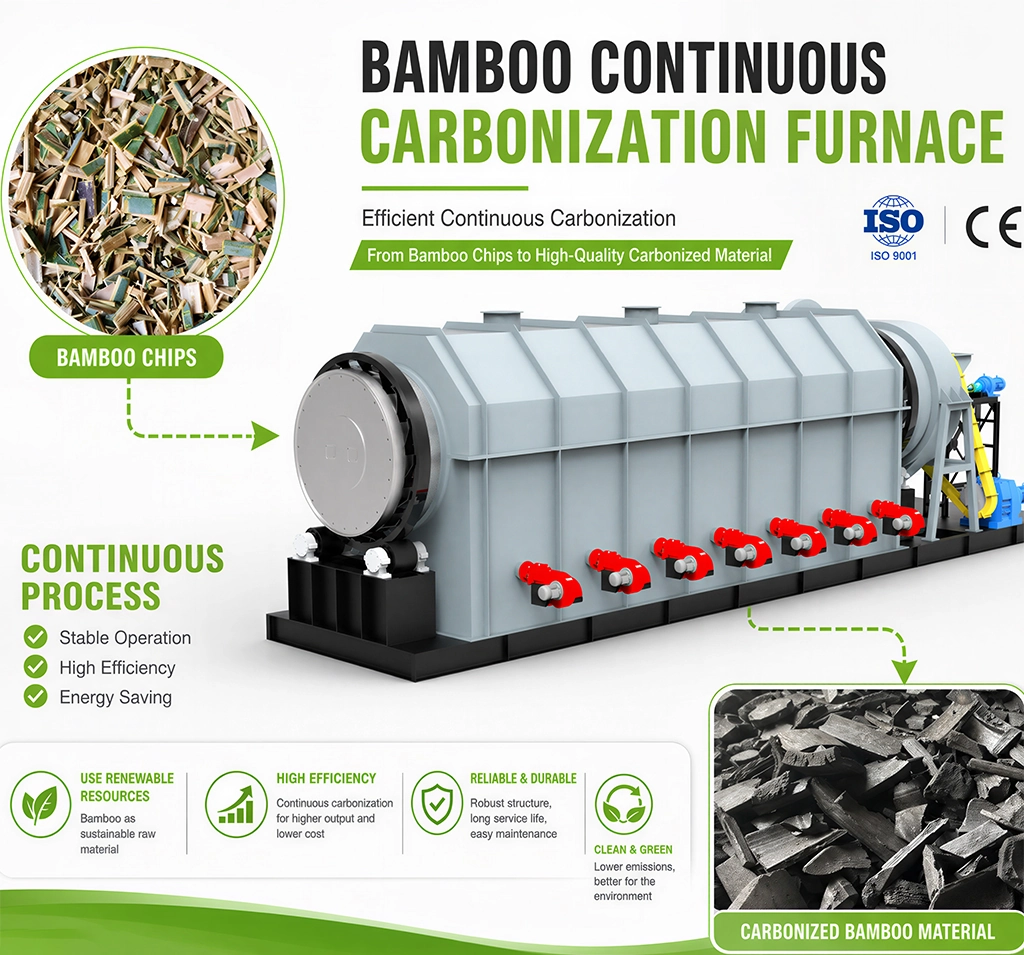
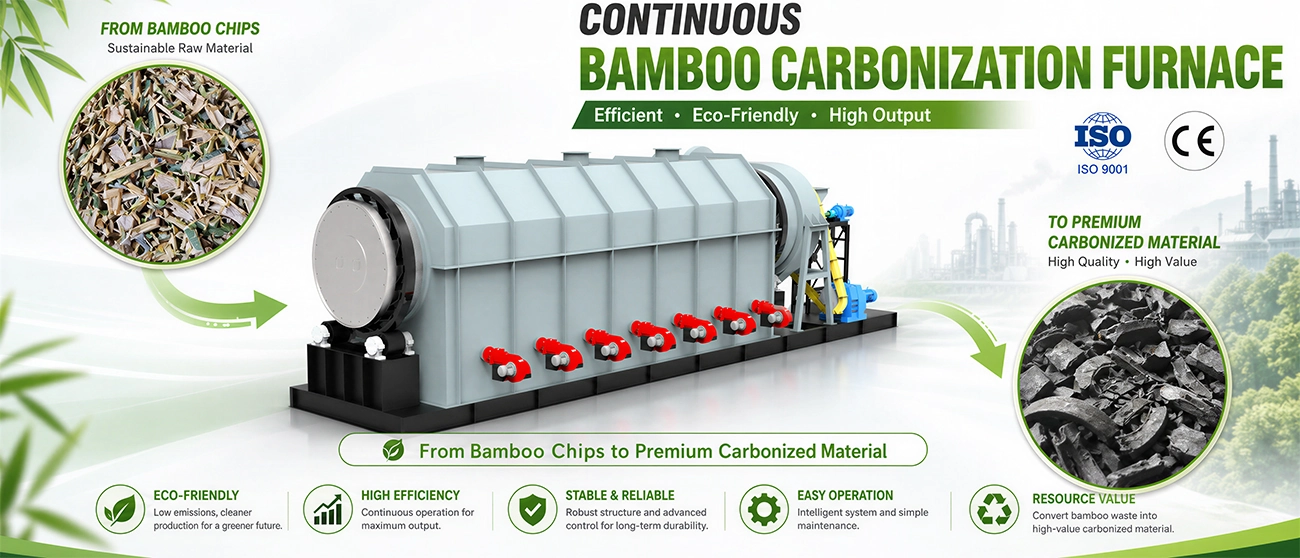
| Model | XY-800 | XY-1000 | XY-1200 | XY-1500 | XY-1800 | XY-2000 |
| Number of cylinder layers | Single | Single | Double | Double | Double | Double |
| Cylinder diameter | 800mm | 1000mm | 1200/700mm | 1500/900mm | 1800/1200mm | 2000/1500mm |
| Capacity | 200-300kg/h | 300-400kg/h | 450-600kg/h | 600-800kg/h | 800-1000kg/h | 1000-1200kg/h |
| Cylinder material | 309S/310S/316L | 309S/310S/316L | 309S/310S/316L | 309S/310S/316L | 309S/310S/316L | 309S/310S/316L |
| Temerature | 500-800ºC | 500-800ºC | 500-800ºC | 500-800ºC | 500-800ºC | 500-800ºC |
| Carbonization time | 20-60min | 20-60min | 20-60min | 20-60min | 20-60min | 20-60min |
| Raw material particle size | ≤4cm | ≤4cm | ≤4cm | ≤4cm | ≤4cm | ≤4cm |
| Heating method | indirect heating | indirect heating | indirect heating | indirect heating | indirect heating | indirect heating |
| Operation mode | continuously working | continuously working | continuously working | continuously working | continuously working | continuously working |
| Control method | PLC control | PLC control | PLC control | PLC control | PLC control | PLC control |
Frequently Asked Questions
Its horizontal heating chamber provides convenient sample loading and compatibility with gas delivery systems, making it suitable for many material research and controlled atmosphere experiments.
Yes. A suitably configured furnace can be used in graphene-related thermal processing and CVD research. The required gas delivery, temperature conditions, and substrate arrangement depend on the specific synthesis method.
Yes. Powder materials can be placed in compatible sample boats or containers for calcination, annealing, thermal decomposition, and other laboratory processes.
A standard horizontal tube furnace has a conventional tubular heating chamber. A horizontal split tube furnace has an opening furnace body that can be separated or hinged to facilitate tube installation and sample access.


