駅全体を検索
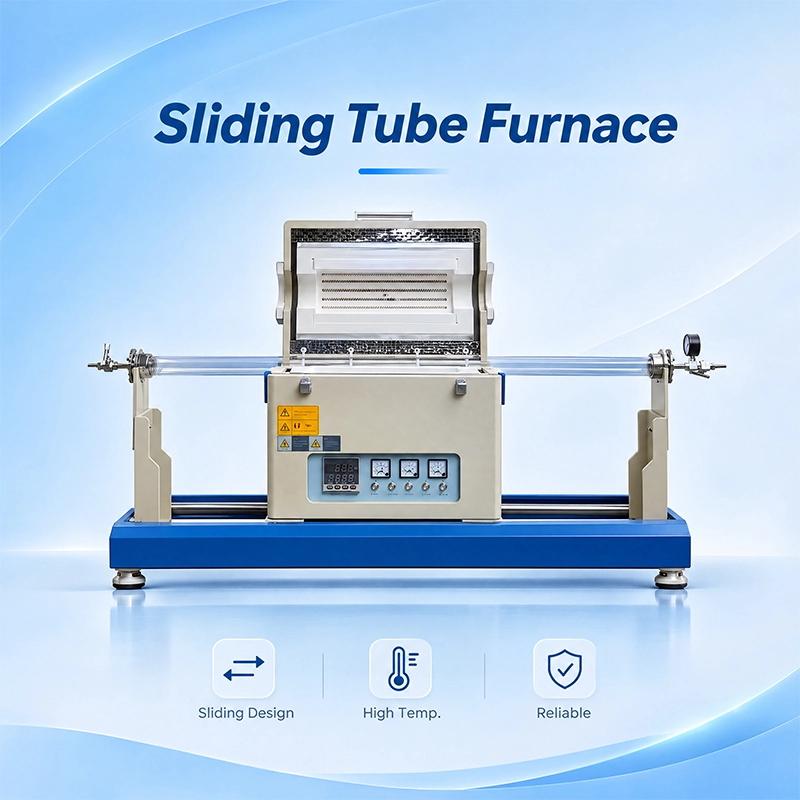
A Sliding Tube Furnace is a specialized high-temperature heating device designed with a movable furnace body or sliding heating assembly. Unlike conventional fixed tube furnaces, this equipment allows the heating chamber to move along a sliding rail or mechanical guide system, providing greater flexibility during sample loading, unloading, and thermal processing.
The furnace generally consists of a heating chamber, ceramic fiber insulation, heating elements, furnace tube, temperature control system, sliding mechanism, and supporting frame.
Depending on the equipment design, the furnace body can move horizontally along the guide rail, allowing operators to position the heating zone at the required location.
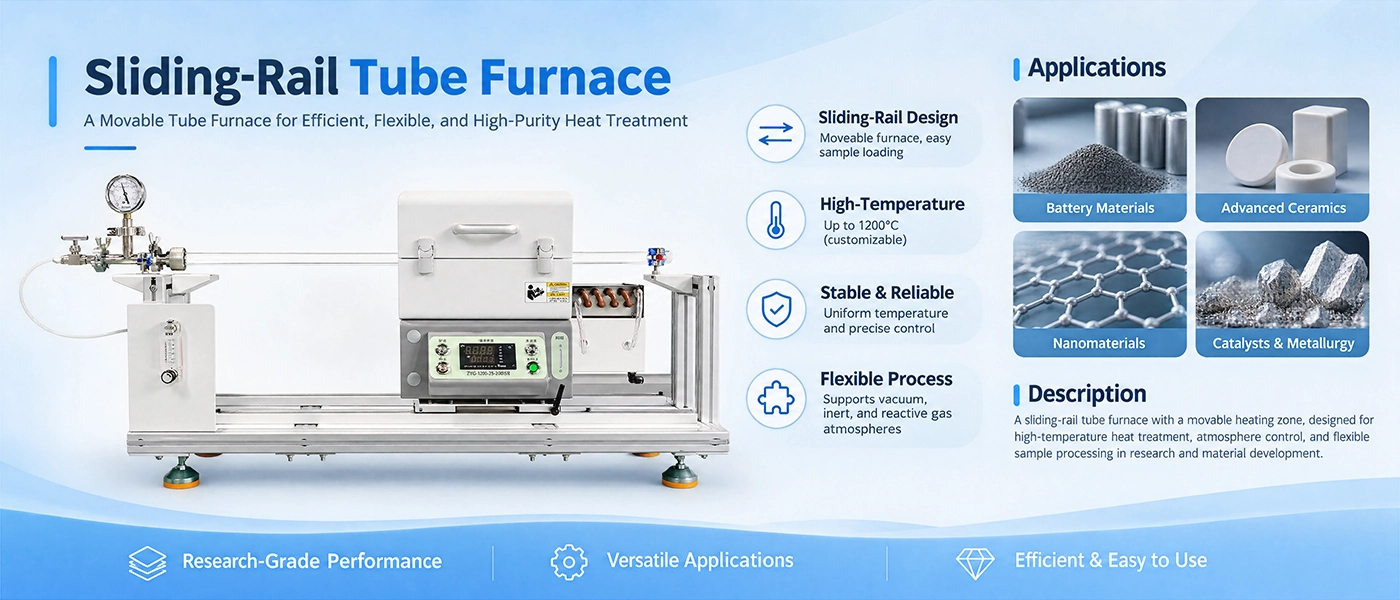
Sliding tube furnaces are widely used in laboratories, universities, research institutes, and industrial material processing facilities for high-temperature experiments, thermal treatment, sintering, calcination, and material preparation.
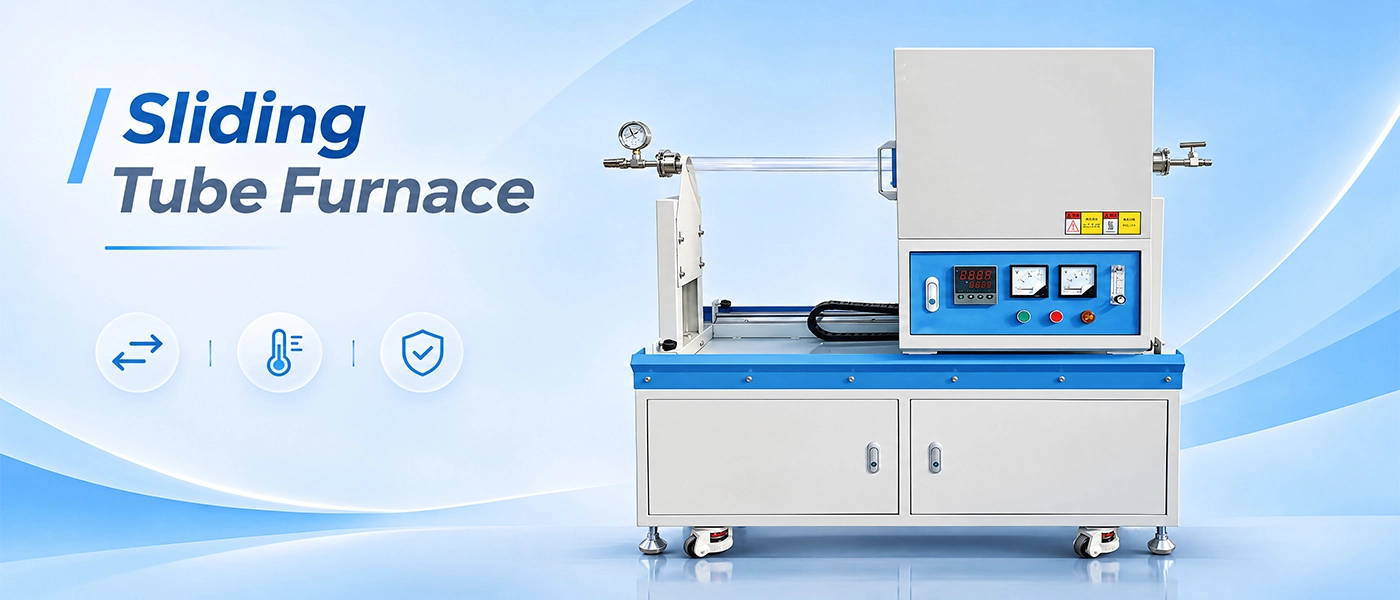
The sliding tube furnace operates by converting electrical energy into thermal energy through resistance heating elements installed around the furnace tube.
The heating elements generate heat and transfer it to the furnace tube through radiation and thermal conduction. Samples placed inside the tube are heated under controlled temperature conditions.
The sliding mechanism provides convenient movement of the heating assembly or furnace body along the designated track.
The basic working process includes:
The sliding structure improves operational flexibility and facilitates experimental procedures that require adjustable furnace positioning.
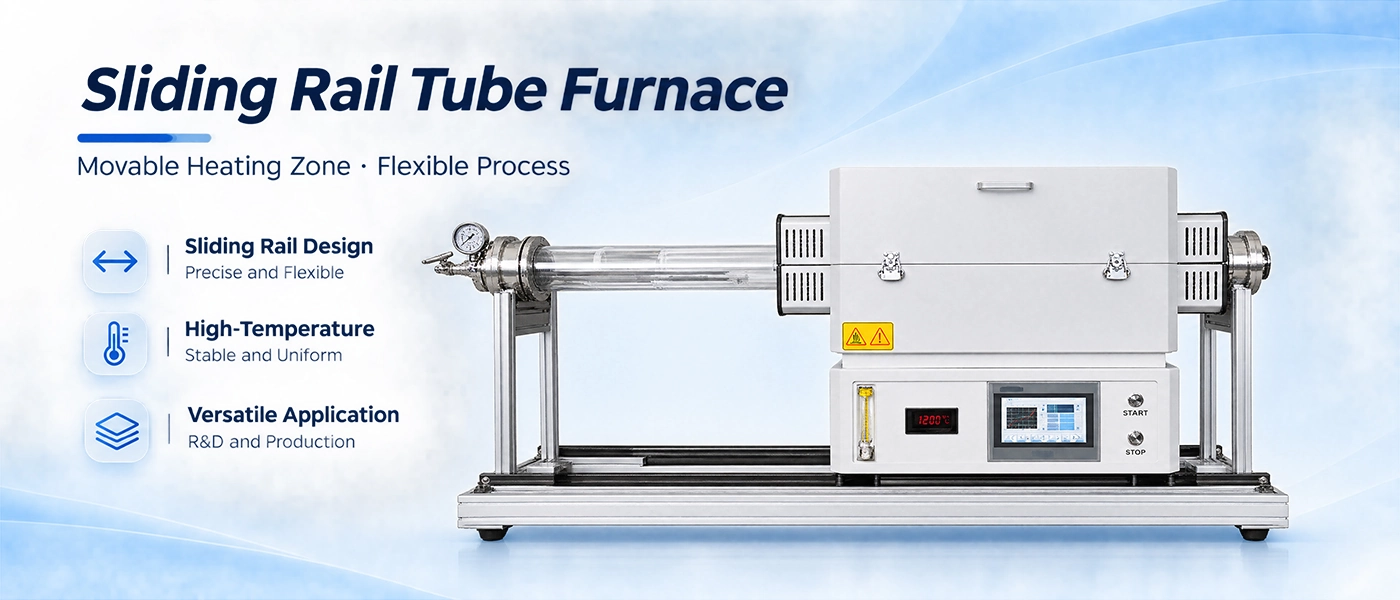
The furnace is equipped with a sliding mechanism that allows the heating chamber or furnace assembly to move along a guide rail. This design provides convenient access to the furnace tube and helps simplify sample handling.
Depending on the selected heating elements and furnace configuration, the equipment can be designed for different temperature requirements, including 1200°C, 1400°C, and 1600°C.
A programmable temperature controller allows users to set heating rates, holding temperatures, and heating durations. Multiple temperature control zones can also be configured according to application requirements.
The furnace chamber uses lightweight ceramic fiber insulation materials to reduce heat loss and improve temperature uniformity.
Different furnace tube materials can be selected according to operating temperature, atmosphere, and chemical compatibility requirements.
Available tube materials include:
The sliding tube furnace can be configured for different experimental environments, including:
The furnace can be customized according to heating temperature, tube diameter, heating zone length, sliding distance, furnace structure, and process requirements.
Sliding tube furnaces are suitable for various research and industrial thermal processing applications.
Used in universities, laboratories, and research centers for studying the thermal properties, phase transformations, and structural changes of different materials.
Typical research materials include:
The furnace can be used for high-temperature sintering experiments involving ceramic powders, metal powders, and other advanced materials.
Controlled heating programs help researchers investigate the relationship between sintering temperature, holding time, and final material properties.
Sliding tube furnaces are suitable for calcination experiments involving inorganic compounds, mineral materials, ceramic powders, and chemical materials.
The equipment can be used for annealing, oxidation, reduction, and other thermal treatment processes under controlled atmospheric conditions.
When equipped with a compatible gas delivery system and furnace tube, a sliding tube furnace can be integrated into certain CVD experimental systems for thin-film deposition and material synthesis.
The furnace can be used in laboratory research involving cathode materials, anode materials, carbon materials, and other battery-related materials.
Suitable for thermal processing experiments involving semiconductor materials, electronic ceramics, and functional components.
| Model | G-1200-25-200SR | G-1200II-200SR |
| Operating Temperature | ≤1100°C | ≤1100°C |
| Temperature Sensor | K-Type Thermocouple | K-Type Thermocouple |
| Furnace Tube Material | High-Purity Quartz | High-Purity Quartz |
| Furnace Tube Type | Straight Tube | Straight Tube |
| Tube Outer Diameter | 25 mm | 80 mm |
| Tube Inner Diameter | 21 mm | 74 mm |
| Furnace Tube Length | Approx. 1000 mm | Approx. 1400 mm |
| Heating Zone Length | 200 mm | 200 + 200 mm |
| Constant Temperature Zone Length | 60 mm | 200 mm |
| Heating Power | 1.5 kW | 3 kW |
A sliding tube furnace is used for high-temperature material processing, including sintering, calcination, annealing, oxidation, reduction, and laboratory material research.
The maximum temperature depends on the heating element and furnace insulation. Common configurations include 1200°C, 1400°C, and 1600°C.
The main difference is the sliding mechanism. A sliding tube furnace has a movable heating assembly or furnace body, while a standard tube furnace usually has a fixed heating chamber.
Yes. With a suitable gas sealing and delivery system, it can operate under nitrogen or argon atmospheres.
Yes. A compatible vacuum tube, sealing components, vacuum pump, and pressure monitoring system can be configured.
Common options include quartz and alumina. The appropriate material depends on operating temperature, atmosphere, and chemical compatibility.
Yes. It can be used for laboratory ceramic sintering experiments and other high-temperature ceramic material processing applications.
Yes. A programmable PID temperature controller can be used to set heating rates, holding temperatures, and heating durations.
Yes. Depending on the design, manual or motorized sliding mechanisms can be considered.
Yes. Customization options include maximum temperature, furnace tube diameter, heating zone length, sliding distance, atmosphere system, and temperature control configuration.


