Search the whole station
Scope of application
It is mainly used in the manufacture of semiconductor devices, such as the deposition of silicon nitride (Si₃N₄) passivation layers and silicon dioxide (SiO₂) dielectric layers on silicon-based chips; low-temperature growth of graphene and carbon nanotubes in nanomaterial synthesis; and the preparation of PIN junctions for amorphous silicon (a-Si) thin-film solar cells in the photovoltaic industry.
Basic Concepts and Operating Principles of PECVD Tube Furnaces
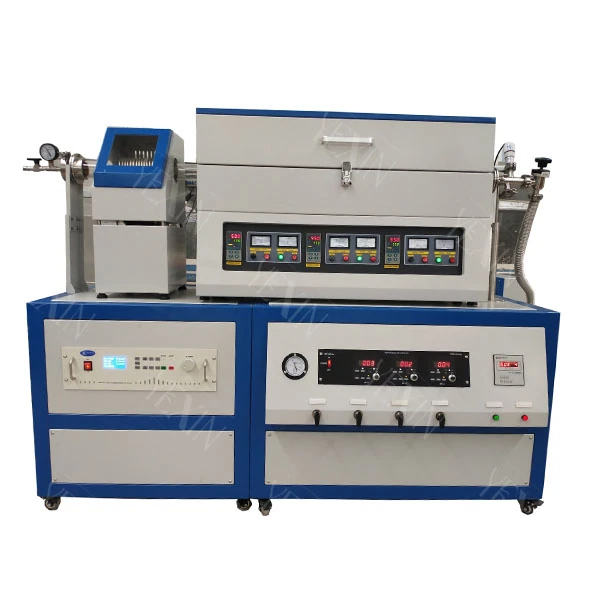
A PECVD tube furnace, or plasma-enhanced chemical vapor deposition (CVD) tube furnace, is an advanced device that incorporates plasma energy into traditional CVD technology. Its core principle is to excite reactant gases through radio frequency (RF) or other means to form a plasma. High-speed electrons in the plasma collide with neutral molecules, breaking the gas molecules into highly reactive fragments or activated states. This promotes chemical reactions at low temperatures, leading to thin film deposition on the substrate surface. Compared to traditional CVD, PECVD accelerates the reaction process through the high activity of the plasma, significantly reducing reaction temperatures while improving film deposition rate and quality.
Core Technical Features of PECVD Tube Furnaces
High-Efficiency Deposition Performance: Utilizing RF glow technology, deposition rates can reach 10 Å/s, far exceeding traditional CVD equipment.1 Advanced multi-point RF feeding technology and a specialized gas path design achieve film uniformity of 8%, with variation between substrates deposited in a single run less than 2%, ensuring batch-to-batch consistency.1
Low-Temperature Process Advantages: Leveraging the plasma-enhanced effect, thin film growth can be achieved at lower temperatures, avoiding damage to sensitive materials caused by high temperatures. This makes it particularly suitable for the fabrication of temperature-sensitive substrates and devices. Precision Control System: Equipped with multiple high-precision mass flow meters to control gas ratios, combined with the AISO fully automatic intelligent control system, this system supports precise adjustment of process parameters and multi-stage program setting, ensuring process stability.
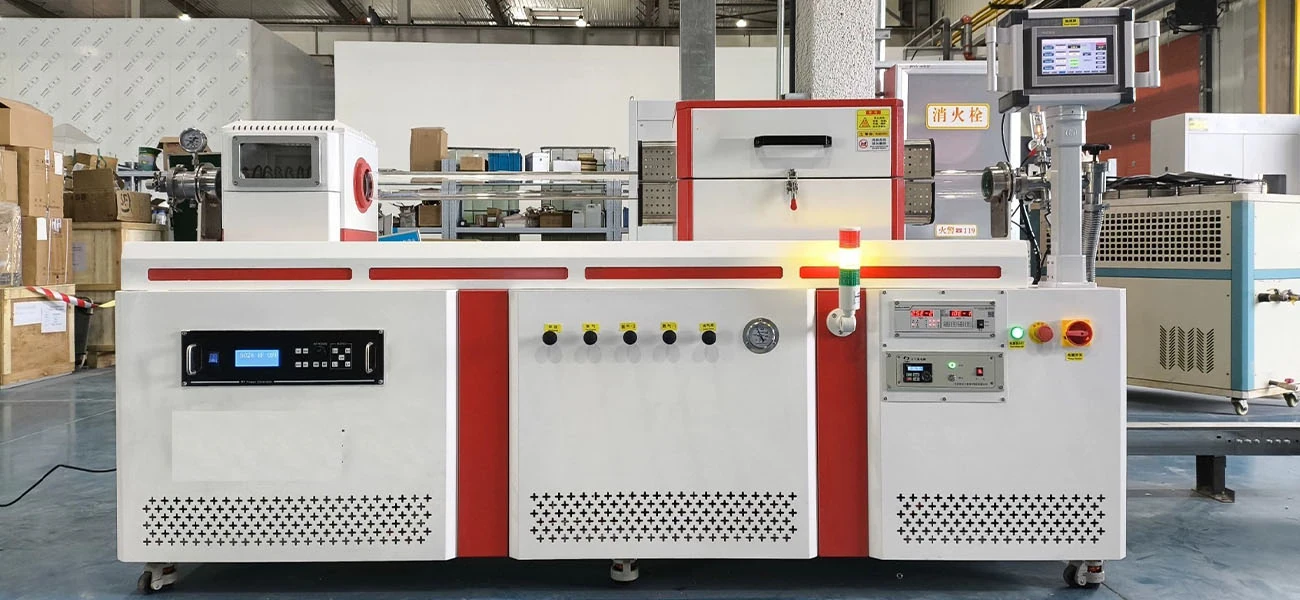
Optimized Structural Design: The sliding furnace design enables rapid temperature rise and fall, and the double-layer furnace shell structure with fan heat dissipation keeps the shell surface temperature low. The furnace tubes are made of high-purity materials (such as high-purity corundum tubes) and sealed with stainless steel high-vacuum flanges on both ends to ensure airtightness and high-temperature resistance (maximum operating temperature can reach 1200°C).
Main Application Areas and Scenarios
Thin Film Material Preparation: Capable of growing metal, ceramic, and composite thin films, widely used in semiconductor devices, optoelectronic devices, MEMS, and other fields. By controlling reaction conditions, semiconductor and optical films with customized electrical and optical properties can be produced.
Nanomaterial and Advanced Materials R&D: Ideal for laboratory growth of nanomaterials such as graphene, nanoparticles, and nanowires. Adjustable reaction conditions and substrate materials can be used to synthesize nanostructures of varying morphologies and sizes. Research and Industrial Applications: Used in universities and research institutes for research experiments such as vacuum coating, nano-thin film preparation, high-temperature atmosphere sintering, atmosphere reduction, CVD experiments, and vacuum annealing. It can also be expanded to serve as a plasma cleaning and etching system to meet multi-functional experimental needs.
System Composition and Technical Parameters
The PECVD tube furnace system primarily consists of the following modules:
Vacuum and Pressure Control System: Configurable with various vacuum systems to achieve the ideal vacuum level and meet the requirements of a low-pressure reaction environment.
Deposition System: Includes core components such as the sliding furnace, heating unit, and RF generator, enabling plasma excitation and thin film deposition.
Gas and Flow Control System: Multiple high-precision mass flow meters precisely control the types and flow ratios of the reactant gases.
Safety Protection System: Features over-temperature and abnormal pressure alarms to ensure safe operation.
Computer Control and Automation System: Integrated with process parameter settings, real-time monitoring, and data logging, it offers convenient operation.
| Model | YX-1200P |
| Rated total power | 3.2KW (heating furnace: 2.6KW, radio frequency unit: 0.15KW, vacuum unit: 0.45KW) |
| Maximum temperature | 1200℃ |
| Continuous operating temperature | ≤1100℃ |
| Recommended heating rate | ≤10°C/min |
| Temperature measuring element | K-type thermocouple |
| Heating zone length | Dual independent heating zones: 230mm + 230mm |
| Furnace tube dimensions | Φ50 x 1900mm |
| Temperature control method | FFuzzy PID control and auto-tuning, intelligent 30-segment programmable control, over-temperature and burnout alarms |
| Temperature control accuracy | ±1°C |
| Heating element | Resistance wire |
| RF power | 150W |