Поиск по всей станции
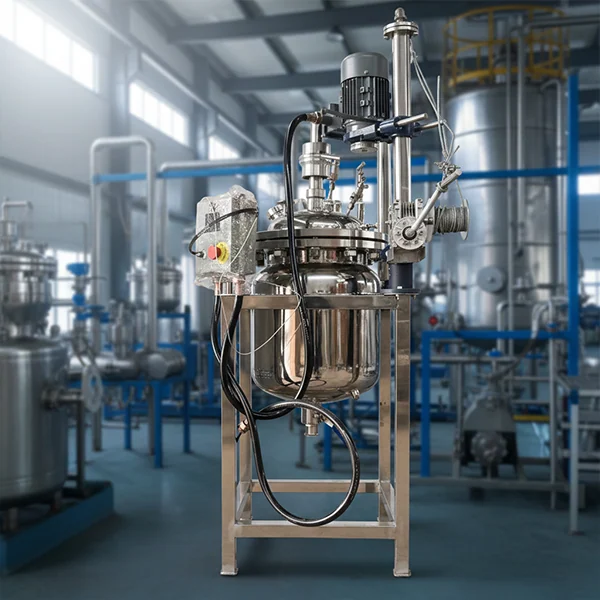
A stainless steel autoclave is a pressure-resistant vessel designed for processing materials under high temperature and high pressure conditions. It is widely used in laboratories, research institutes, and industrial facilities for sterilization, chemical reactions, hydrothermal synthesis, and material processing. Due to its excellent corrosion resistance and mechanical strength, stainless steel is the preferred material for autoclave construction.
Stainless steel autoclaves play a critical role in modern chemical engineering, pharmaceutical manufacturing, material science, and biological research, providing a safe and controlled environment for complex processes.
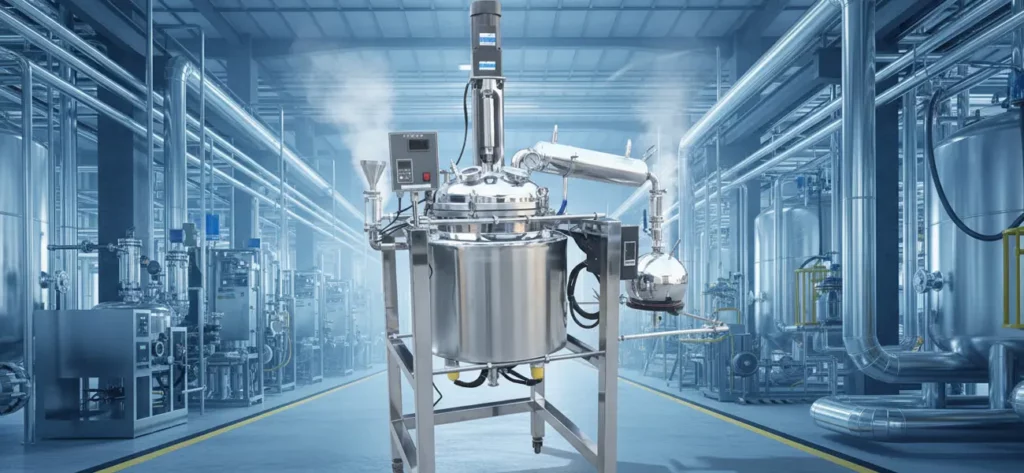
A stainless steel autoclave is a sealed container capable of withstanding elevated pressure and temperature while maintaining precise control over internal conditions. It is commonly manufactured from SS304, SS316, or SS316L stainless steel, depending on the chemical compatibility and application requirements.
Autoclaves can be designed for sterilization, chemical reactions, or material synthesis, making them versatile and indispensable equipment in many industries.
The choice of stainless steel grade directly affects durability, safety, and service life.
The working principle of a stainless steel autoclave is based on sealed heating under pressure:
This method allows processes that cannot occur under normal atmospheric conditions.
Used for hydrothermal reactions, polymerization, oxidation, and catalyst preparation.
Applied in sterilization of equipment, drug synthesis, and intermediate processing.
Used for nanomaterial synthesis, crystal growth, and advanced material research.
Applied in sterilization, fermentation preparation, and bio-processing.
Modern stainless steel autoclaves are equipped with:
These features ensure safe operation under demanding conditions.
| Model | BSF-10L | BSF-20L | BSF-30L | BSF-50L | BSF-100L |
| Power(W) | 200(1:3) | ||||
| External dimensions(mm) | 540*480*1800 | 550*700*1830 | 550*700*1950 | 700*600*2050 | 700*800*2270 |
| Number of cauldron lid openings | 8 | ||||
| Temperature measurement port | 50.5 chuck / φ8 temperature measuring tube | 50.5 chuck / φ12 temperature measuring tube | |||
| Drop hole | 50.5 mm chuck/1000 ml funnel | 50.5 mm chuck / 2000 ml funnel | |||
| Return hole | 50.5 chuck / φ38 | 50.5 chuck / φ38 | |||
| sight glass | φ51 | φ89 | |||
| sight glass | φ32 | / | |||
| Feeding port | / | φ89 | |||
| Pressure gauge port | 50.5 mm chuck / integrated pressure gauge | ||||
| exhaust vent | 2-way exhaust valve | ||||
| Mixing hole | SUS316L propeller-type mixing impeller | ||||
| High and low temperature resistance (°C) | -120~260 | ||||
| Stainless steel thickness (mm) | φ3 | φ4 | |||
| Discharge valve port diameter | φ35 | ||||

 xuye
xuye