駅全体を検索

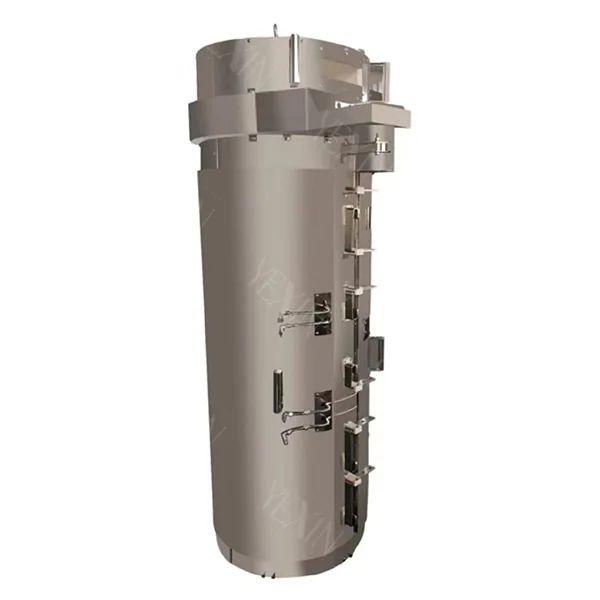
diffusion furnace heater

diffusion heater

Scope of application

The primary and most critical application scope of diffusion heaters is concentrated in the field of semiconductor manufacturing, especially in thermal processing steps that require extremely high temperature uniformity and stability.

TEL+8618836556085

Diffusion heater

Diffusion heater is a heating system used in diffusion processes or high-temperature heat treatment processes. It usually works in combination with diffusion furnace tubes (quartz tubes or stainless steel tubes), providing a stable and uniform high-temperature environment. This allows diffusion, oxidation, nitridation, annealing, and other reactions to occur on the surface or inside of workpieces, thereby improving material properties or achieving specific process goals.

Diffusion heater

The main functions of a diffusion heater include:

  1. Temperature control: Maintaining constant temperatures between 200℃ and 1300℃.
  2. Thermal uniformity: Ensuring minimal temperature gradients inside the furnace tube.
  3. Atmosphere compatibility: Suitable for air, nitrogen, hydrogen, oxygen, and other atmospheres.
  4. Safety and durability: Equipped with over-temperature protection, insulation, and long-term stable performance.

Structure of a Diffusion Heater

A typical diffusion heater consists of several key parts:
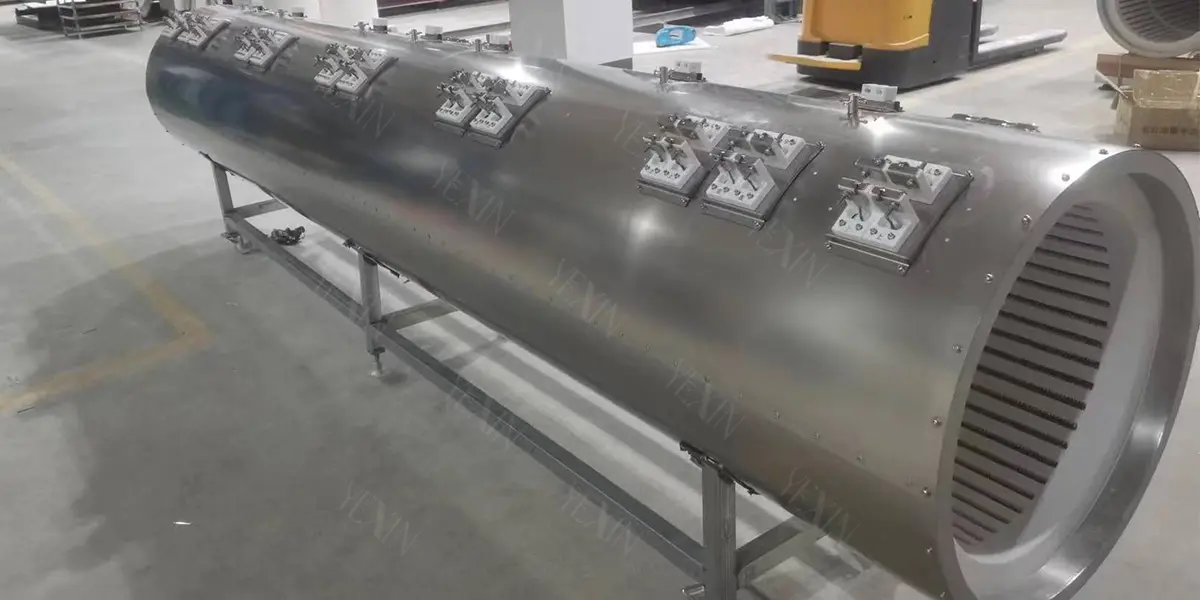
1. Heating Elements

  • Common materials: resistance wire (Fe-Cr-Al alloy, Ni-Cr alloy), silicon carbide rods, molybdenum disilicide rods.
  • Function: Convert electrical energy into heat energy, heating the furnace tube and workpiece.

2. Furnace Insulation Layer

  • Materials: ceramic fiber, alumina fiber, aluminum silicate boards.
  • Function: Reduce heat loss and improve heating efficiency.

3. Furnace Tube or Reaction Chamber

  • Materials: quartz tubes, stainless steel tubes (310S, Inconel 600), high-purity alumina tubes.
  • Function: Provide the heating and reaction space.

4. Temperature Measurement and Control System

  • Components: thermocouples, PID controllers, programmable modules.
  • Function: Achieve precise temperature adjustment, with an accuracy of ±1℃.

5. Outer Shell and Auxiliary Systems

  • Materials: stainless steel or cold-rolled steel with internal insulation.
  • Auxiliary systems: air cooling/water cooling, atmosphere channels, vacuum connections.

Working Principle of a Diffusion Heater

The diffusion heater operates based on the Joule effect and principles of heat transfer.

  1. Joule heating: Electrical current passes through the resistance elements, generating heat.
  2. Heat conduction: Heat transfers from heating elements to the furnace tube wall through solid contact.
  3. Radiation: At high temperatures, the elements radiate infrared energy to heat the workpiece.
  4. Convection: In controlled atmospheres or vacuum conditions, gases may further transfer heat.

By combining these mechanisms, a diffusion heater can rapidly raise the furnace tube to the target temperature and maintain stable process conditions.

Applications of Diffusion Heaters

Diffusion heaters are widely used in various fields:

  1. Semiconductor Industry
    • Oxidation, diffusion, and annealing of silicon wafers.
    • Thin-film deposition and doping in integrated circuit production.
  2. Photovoltaic Industry
    • Phosphorus diffusion for solar cells.
    • Annealing and passivation of silicon-based materials.
  3. Materials Science
    • Nitriding and carburizing of metals.
    • Sintering of ceramics and composites.
  4. Research Laboratories
    • Heat treatment experiments in universities and institutes.
    • Studying thermal properties of samples under controlled atmospheres.

Advantages of Diffusion Heaters

Compared with traditional heating systems, diffusion heaters offer several advantages:

  1. High temperature uniformity: Furnace temperature variation can be controlled within ±2℃.
  2. Energy efficiency: Ceramic fiber insulation reduces energy consumption.
  3. Long service life: Heating elements and insulation materials withstand high temperatures.
  4. Programmable control: Multi-stage heating curves with high automation.
  5. Wide applicability: Compatible with various atmospheres and processes.

Selection Guide for Diffusion Heaters

When choosing a diffusion heater, users should consider:

  1. Maximum operating temperature: Options for 800℃, 1000℃, or 1200℃ depending on the process.
  2. Type of heating element: SiC rods are suitable up to 1400℃, MoSi2 rods up to 1700℃.
  3. Heating zone length: Single-zone, dual-zone, or three-zone designs for temperature gradients.
  4. Furnace tube material: Quartz tubes for high-purity processes, stainless steel tubes for robust use.
  5. Control system: PLC integration, remote monitoring, and data logging capabilities.

Maintenance and Care

To extend the service life of a diffusion heater, proper maintenance is essential:

  1. Avoid over-temperature operation: Prevent premature failure of heating elements.
  2. Keep furnace tube clean: Avoid contamination that may affect process purity.
  3. Check thermocouples regularly: Prevent temperature deviations.
  4. Maintain atmosphere purity: Avoid corrosive gases that damage elements and tubes.
  5. Replace consumables: Ceramic supports, sealing rings, and other parts as needed.

Diffusion Heater Video

diffusion furnace heater

Diffusion Heater Parameters

Operating temperature ≤1300℃
Length of constant temperature zone500mm-1000mm
Furnace body diameterΦ90~Φ360 mm (3~12 inches)